12 Best CRMs for Lead Generation in 2026 (Ranked)
Compare 12 top CRMs for lead generation with detailed pros, cons, pricing, and use cases to find the best fit for your sales team.
A robust lead generation pipeline is the lifeblood of any growing business. Yet, managing a flood of potential customers from various channels-social media, email campaigns, web forms, and events-can quickly become a chaotic, spreadsheet-driven nightmare. Leads fall through the cracks, follow-ups are missed, and valuable opportunities are lost. The right Customer Relationship Management (CRM) system acts as a central nervous system for your sales process, transforming chaos into a streamlined, automated, and highly efficient growth engine.
Finding the best CRM for lead generation, however, isn't a one-size-fits-all endeavor. The ideal platform for a B2B startup focused on high-touch outbound sales will differ significantly from what a high-volume B2C e-commerce business needs. Your choice depends on your specific sales cycle, team size, budget, and the tools you already use. A system that excels at automating email sequences might lack the robust pipeline visualization another team requires. This guide is designed to cut through the noise and provide a clear, practical roadmap to selecting the right tool for your unique needs.
We've analyzed the top CRMs on the market, focusing specifically on their lead capture, management, and nurturing capabilities. In this comprehensive resource, you will find:
- Detailed profiles of leading CRMs like HubSpot, Salesforce, Zoho, and Pipedrive, complete with screenshots and direct links.
- Practical analysis of each platform's core lead generation features, ideal user profile, and honest pros and cons.
- Actionable insights into how to leverage these tools for faster prospecting and improved data quality, especially for teams active on professional networks and email.
This listicle is built to be a definitive resource, helping startup founders, sales teams, and marketers make an informed decision to fuel their growth.
1. HubSpot
HubSpot earns its top spot as arguably the best CRM for lead generation due to its powerful, all-in-one platform that combines a free, robust CRM with sophisticated sales and marketing tools. Its core strength lies in its native lead capture capabilities. Users can effortlessly create and embed forms, pop-ups, chatbots, and landing pages directly from the platform, with all submissions automatically creating or updating contact records in the Smart CRM. This seamless integration eliminates the common friction points between marketing efforts and sales data entry.
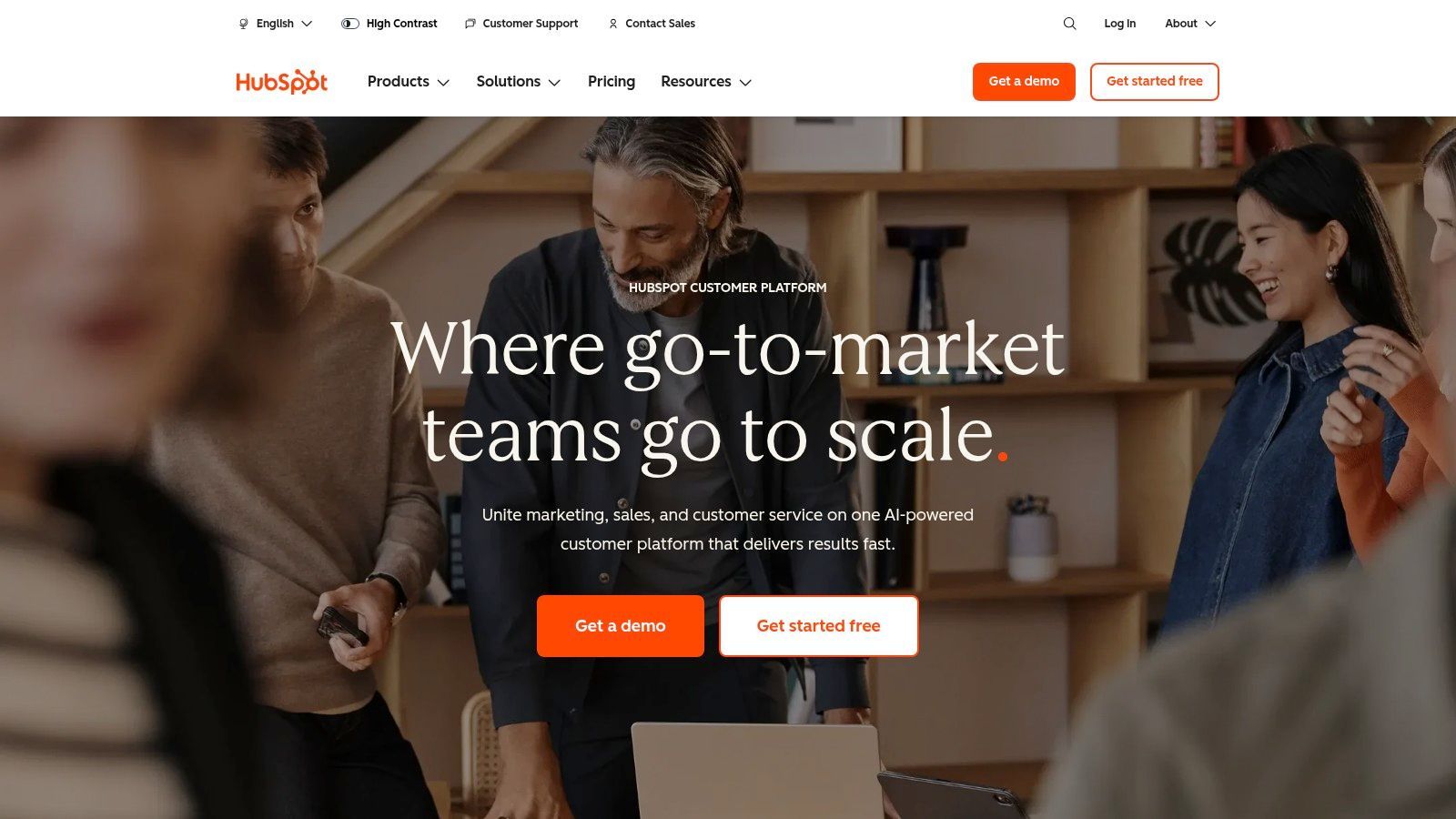
The platform is exceptionally well-suited for teams that need to start quickly without an initial investment but want a clear path to scale. The intuitive user interface makes it easy for startups and small businesses to get immediate value. As your team grows, you can unlock advanced features like automated lead routing and multi-step sales sequences by upgrading to paid Sales Hub tiers. This scalability ensures the CRM grows with your business needs. HubSpot’s reporting tools also provide deep insights into your lead lifecycle, helping you understand lead value and optimize your pipeline effectively. By analyzing which channels generate the most qualified leads, you can better understand the value of each lead and focus your resources accordingly.
Key Features & User Insights
- Ideal For: Startups, SMBs, and scaling businesses that want a free, user-friendly entry point with the capacity for advanced marketing and sales automation.
- Pricing: Offers a comprehensive free CRM. Paid Sales Hub plans start at $20/user/month (Starter), with Professional and Enterprise tiers available. Note the mandatory onboarding fees for higher-tier plans.
- Pros: The free tier is one of the most generous on the market, providing immediate time-to-value. The extensive app marketplace and learning resources (HubSpot Academy) are invaluable.
- Cons: Costs can escalate quickly as you add contacts, users, or require features gated behind higher-priced plans like Pro and Enterprise.
2. Salesforce Sales Cloud
Salesforce Sales Cloud stands as the market-leading CRM, earning its place due to unparalleled configurability and robust, enterprise-grade lead management. Its core strength for lead generation lies in its highly structured data model and powerful automation capabilities. Users can implement sophisticated web-to-lead processes, create complex lead assignment and routing rules, and leverage advanced add-ons for lead scoring, ensuring high-value prospects are prioritized and directed to the right reps instantly. This deep customization makes it an ideal CRM for scaling organizations with complex sales processes.
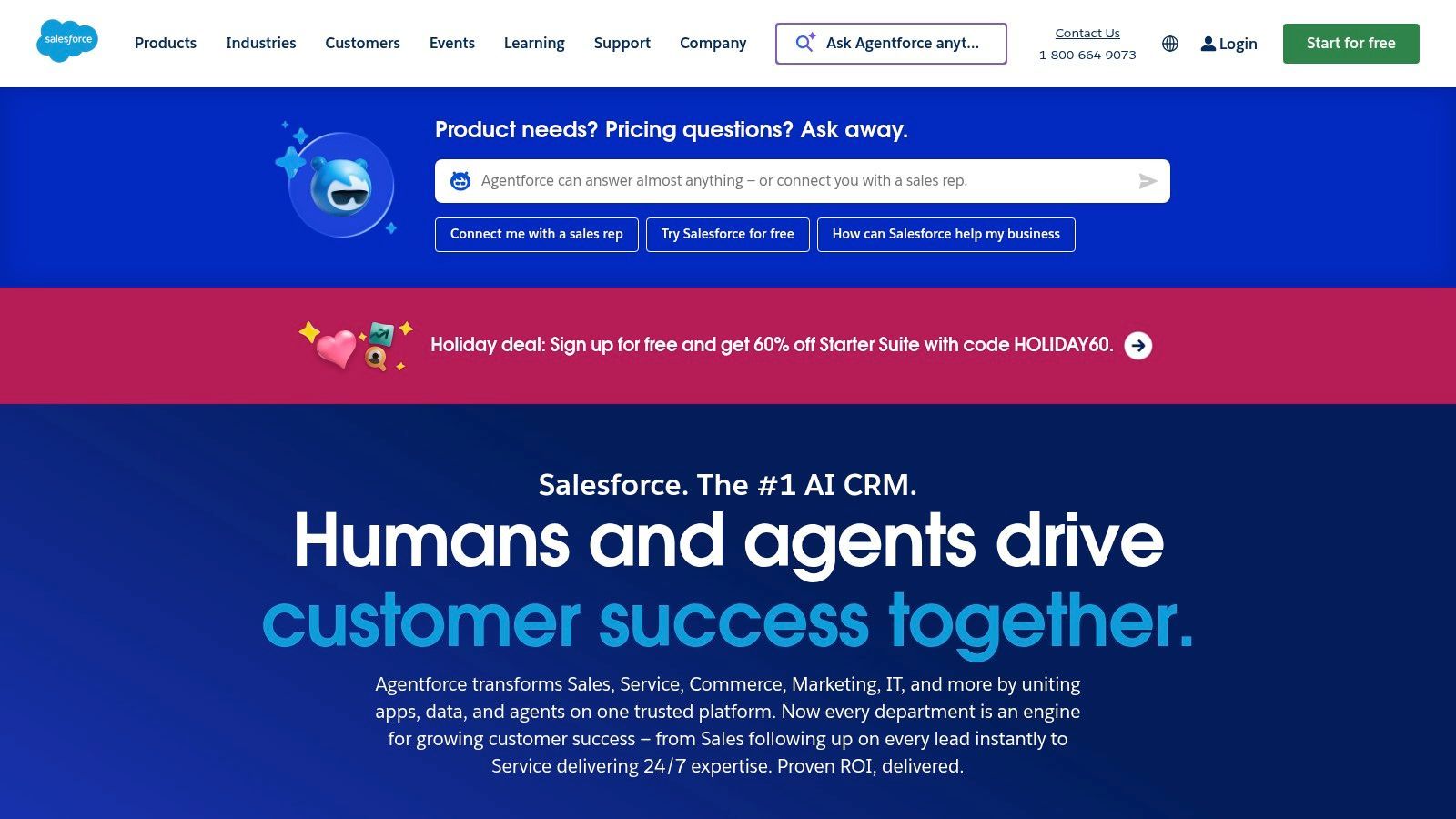
The platform is best suited for businesses anticipating significant growth and requiring a system that can adapt to evolving governance and operational needs. Its vast partner ecosystem, the AppExchange, offers thousands of integrations to extend its lead generation functionality, from advanced marketing automation to specialized data enrichment tools. While its power is immense, this flexibility comes at a price; implementation often requires dedicated administrator expertise. However, for teams that need granular control over their lead lifecycle and enterprise-level security, Salesforce provides a scalable foundation that few competitors can match, making it a powerful contender for the best crm for lead generation in a corporate setting.
Key Features & User Insights
- Ideal For: Mid-market to enterprise companies with complex sales operations, dedicated admin resources, and a need for deep customization and scalability.
- Pricing: Plans start at $25/user/month (Starter Suite), with popular tiers like Professional ($80) and Enterprise ($165) offering more advanced features.
- Pros: Extremely configurable with a vast services ecosystem and community support. It offers enterprise-grade security, governance, and reporting capabilities.
- Cons: The total cost of ownership is high, often requiring specialized admin or developer expertise. Pricing can become complex with AI add-ons and various feature credits.
3. Zoho CRM
Zoho CRM stands out as an exceptionally cost-effective solution, offering a comprehensive suite of lead generation and management tools that make it a top contender for the best crm for lead generation for SMBs. Its strength is its deep integration within the broader Zoho ecosystem, allowing teams to manage everything from web forms and live chat to social media lead capture in a unified environment. All lead data flows directly into the CRM, where it can be automatically assigned to sales reps based on predefined rules, ensuring prompt follow-up.
The platform is designed for businesses that need more than just a basic CRM without the enterprise-level price tag. Its free plan for up to three users is remarkably generous, providing an excellent entry point for small teams. As a business scales, Zoho's affordable paid tiers unlock powerful features like Zia, an AI-powered sales assistant that provides lead scoring, predictions, and anomaly detection. This scalability, combined with its highly customizable modules and robust mobile apps, allows businesses to build a lead management process that perfectly fits their unique workflow and grows with them.
Key Features & User Insights
- Ideal For: Small to mid-sized businesses looking for an affordable, all-in-one CRM with the flexibility to expand into a full business management suite.
- Pricing: A generous free plan is available for up to 3 users. Paid plans start at $14/user/month (Standard), with Professional, Enterprise, and Ultimate tiers available.
- Pros: Highly competitive pricing and an extensive feature set offer outstanding value. The seamless integration with other Zoho apps (Campaigns, Desk, etc.) creates a powerful, unified system.
- Cons: Advanced AI features like predictive scoring are reserved for higher-tier plans. Customer support quality can be inconsistent unless you are on a premium support plan.
4. Pipedrive
Pipedrive excels as a sales-first CRM, making it a strong contender for teams that prioritize a clear, actionable sales pipeline. Its core strength lies in its visual, drag-and-drop interface that simplifies deal management from lead-in to close. While its native CRM is focused on the sales process, Pipedrive offers a powerful suite of lead generation add-ons, most notably LeadBooster. This package includes a chatbot, live chat, web forms, and a prospector tool, allowing teams to capture inbound interest directly from their website and find new outbound leads.
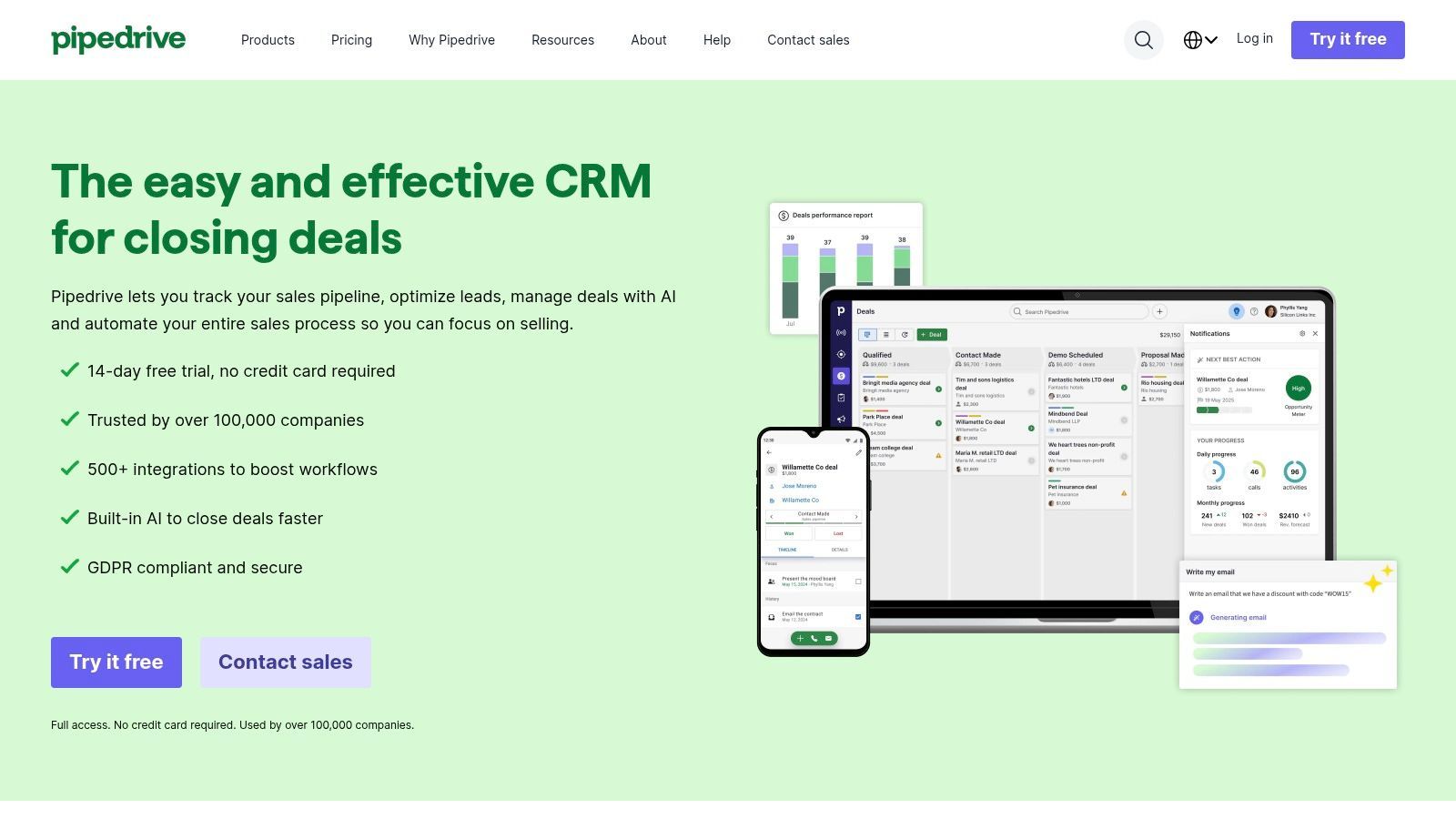
This platform is particularly well-suited for SMBs and dedicated sales teams that need a tool that is easy to adopt and drives immediate action. The clear focus on sales activities ensures that reps can quickly get up to speed without the complexity of an all-in-one marketing suite. Pipedrive's Web Visitors add-on further enhances lead generation by identifying which companies are browsing your site, even if they don't fill out a form, providing a fresh source of warm leads for your sales team. This combination of a streamlined sales workflow and optional, integrated lead-capture tools makes it a highly effective CRM for lead generation.
Key Features & User Insights
- Ideal For: SMBs and sales-focused teams that value simplicity, a visual pipeline, and want dedicated add-on tools for proactive lead generation.
- Pricing: Plans start at $14.90/user/month (Essential). The LeadBooster add-on is an additional cost, starting at $32.50 per company/month. A 14-day free trial is available.
- Pros: Extremely intuitive and easy to set up, encouraging high user adoption. The add-on model allows you to pay for only the lead-gen tools you need. If you're bringing contacts over from another system, you can learn how to import contacts into Pipedrive.
- Cons: Key lead generation features are locked behind paid add-ons, which increases the total cost. Reporting and advanced automation are less robust on lower-tier plans compared to competitors.
5. Freshsales (Freshworks CRM)
Freshsales positions itself as a strong contender for the best CRM for lead generation by integrating sales and marketing with native communication tools. Its key differentiator is the built-in phone, email, chat, and SMS capabilities, allowing teams to engage with leads directly from the CRM record. This omnichannel approach streamlines outreach and ensures all interactions are automatically logged, providing a complete, unified view of the lead's journey without needing multiple third-party integrations for basic communication.
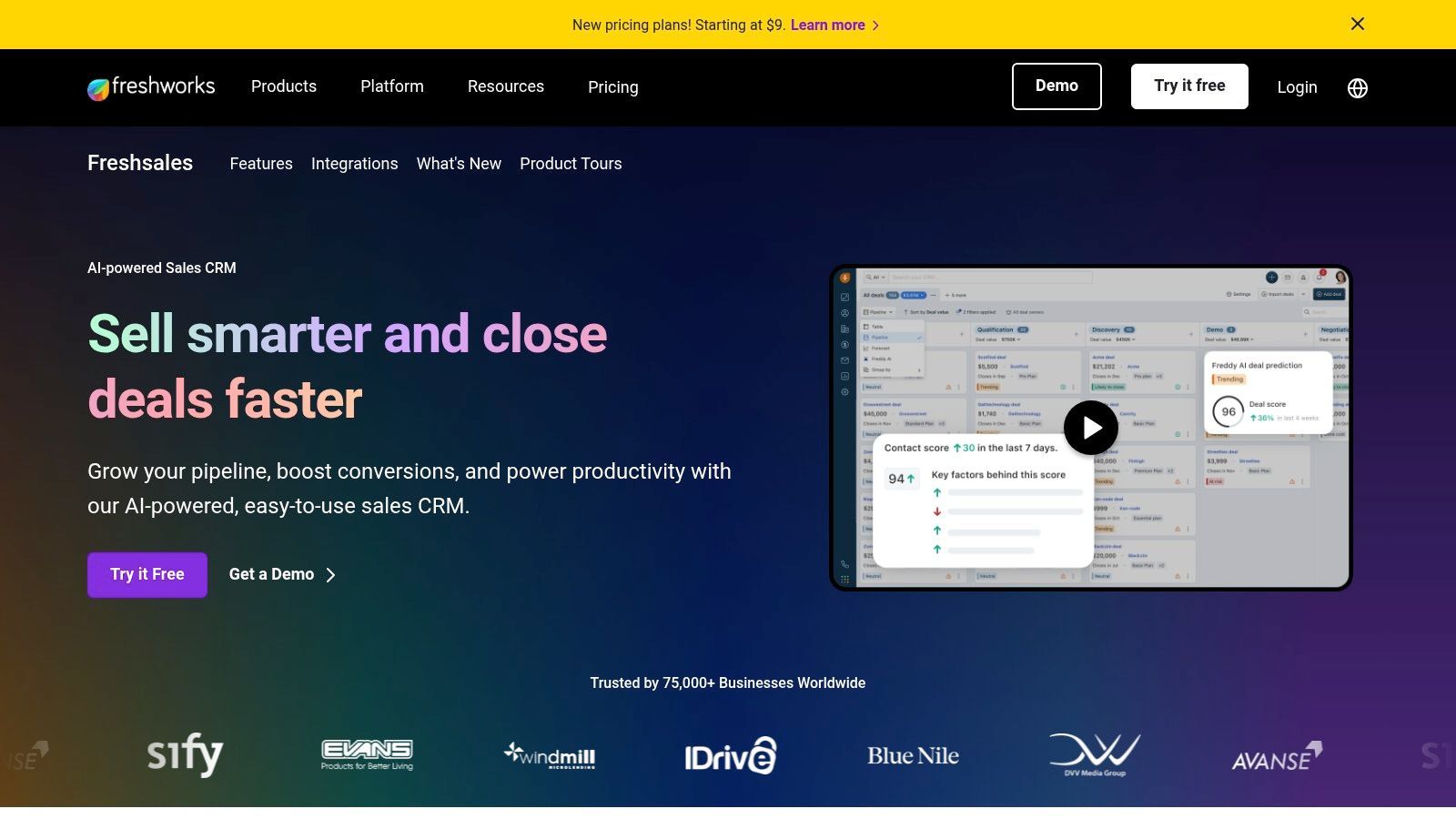
The platform is designed for small to mid-sized teams that prioritize speed and efficiency in their sales process. With features like AI-powered lead scoring and deal insights from "Freddy AI," sales reps can focus their efforts on the most promising prospects. Freshsales also supports multiple sales pipelines and workflow automation, which helps in standardizing lead nurturing and follow-up processes as the team scales. Its aggressive entry-level pricing and generous 21-day free trial make it an accessible option for businesses wanting to implement a powerful, communication-centric CRM without a significant upfront investment.
Key Features & User Insights
- Ideal For: Startups and SMBs that need an all-in-one sales and marketing solution with integrated, omnichannel communication tools.
- Pricing: Offers a free plan for up to 3 users. Paid plans start at $15/user/month (Growth), with Pro and Enterprise tiers available for advanced features.
- Pros: The built-in communication suite (phone, chat, email) provides immense value out-of-the-box. The interface is clean and user-friendly, promoting quick adoption.
- Cons: Advanced analytics and Freddy AI features are gated behind more expensive Pro and Enterprise plans. The app ecosystem is less extensive than those of competitors like HubSpot or Salesforce.
6. monday sales CRM
monday sales CRM stands out as a highly visual and flexible platform, making it a strong contender as a best CRM for lead generation for teams that prioritize customization without coding. Built on the monday.com Work OS, it allows users to construct lead management pipelines that perfectly match their unique processes. Its core advantage is the ability to visually design and automate every stage of the lead journey, from capture via integrated forms to qualification and handoff, all within a colorful, intuitive interface. This unified workspace is ideal for organizations that want to manage sales and post-sale activities like client onboarding on a single platform.
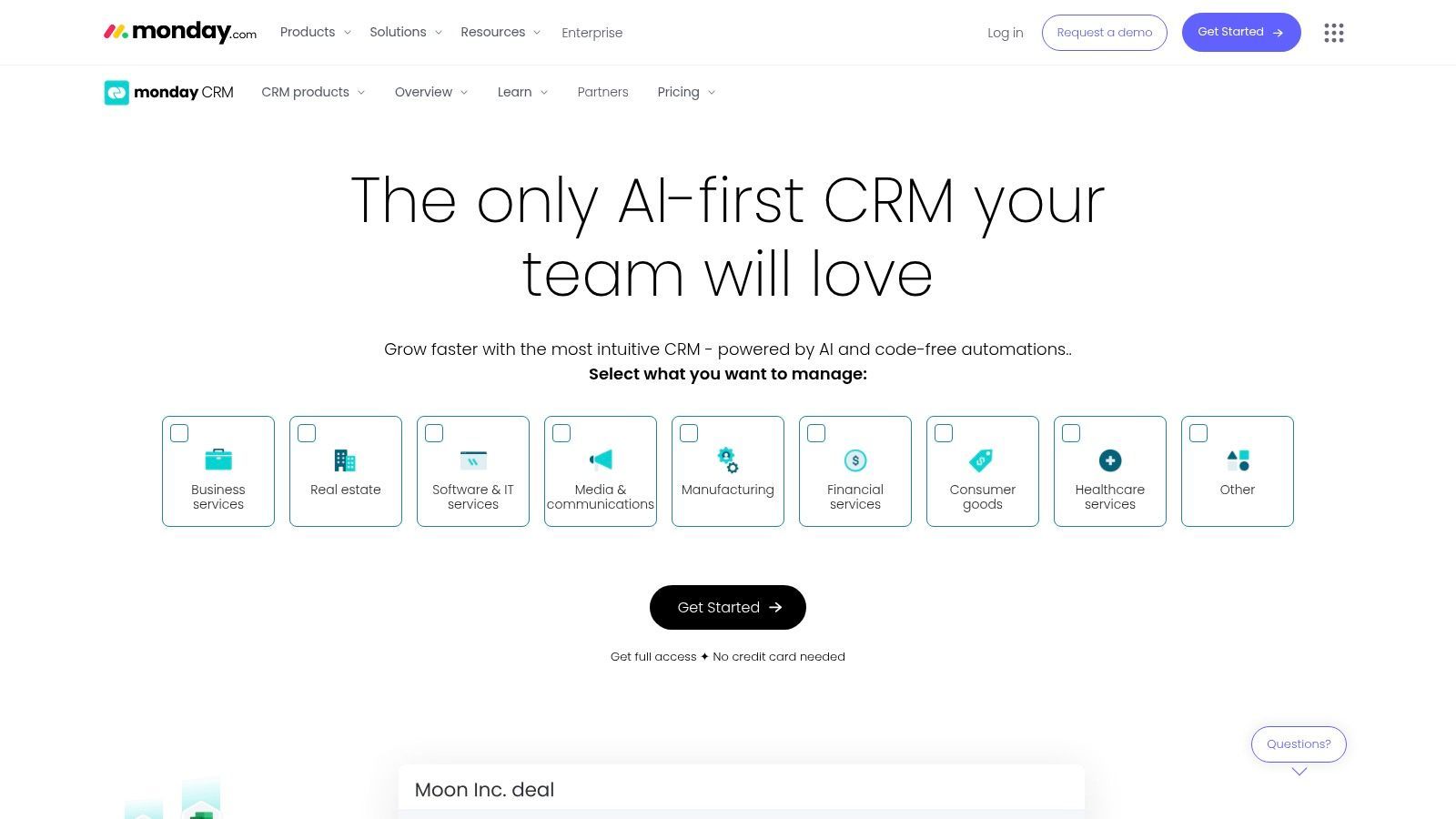
The platform’s no-code automation builder is particularly powerful for lead generation workflows. Teams can set up "if-this-then-that" rules to automatically assign leads based on territory or industry, send follow-up emails, and move deals between stages. This capability, combined with customizable dashboards, provides clear visibility into lead sources and pipeline health, helping teams optimize their efforts effectively. The visual nature of monday sales CRM ensures that even complex sales processes are easy to understand and manage, which promotes high user adoption rates across sales and marketing teams.
Key Features & User Insights
- Ideal For: Teams that require a highly configurable, visual sales process and want to unify sales, marketing, and project management on a single platform.
- Pricing: Plans start with a Basic tier at $12/user/month, but most lead generation features require the Standard plan ($17/user/month) or higher. A 3-seat minimum is required for all paid plans.
- Pros: Exceptionally flexible and customizable without needing development resources. The modern, user-friendly interface makes it easy to adopt and manage complex workflows.
- Cons: The sheer number of customization options can feel overwhelming initially. Pricing requires a minimum seat count, which can be a barrier for very small teams or solo entrepreneurs.

One Chrome extension for all your CRM enrichment
Find verified emails, phone numbers, and job titles on LinkedIn®. Add contacts to any of 29+ supported CRMs in one click.
Start Free Trial


 Trusted by 2,500+ users4.7
7. Keap
Keap positions itself as an all-in-one CRM and marketing automation platform specifically designed for service-based small businesses. Its core advantage lies in consolidating lead generation, client management, and business operations into a single, cohesive system. Keap enables users to build custom lead capture forms, landing pages, and automated follow-up sequences using a powerful visual campaign builder. This integrated approach ensures that once a lead is captured, it's immediately entered into a pre-defined nurture or sales process, including appointment scheduling and payment collection.
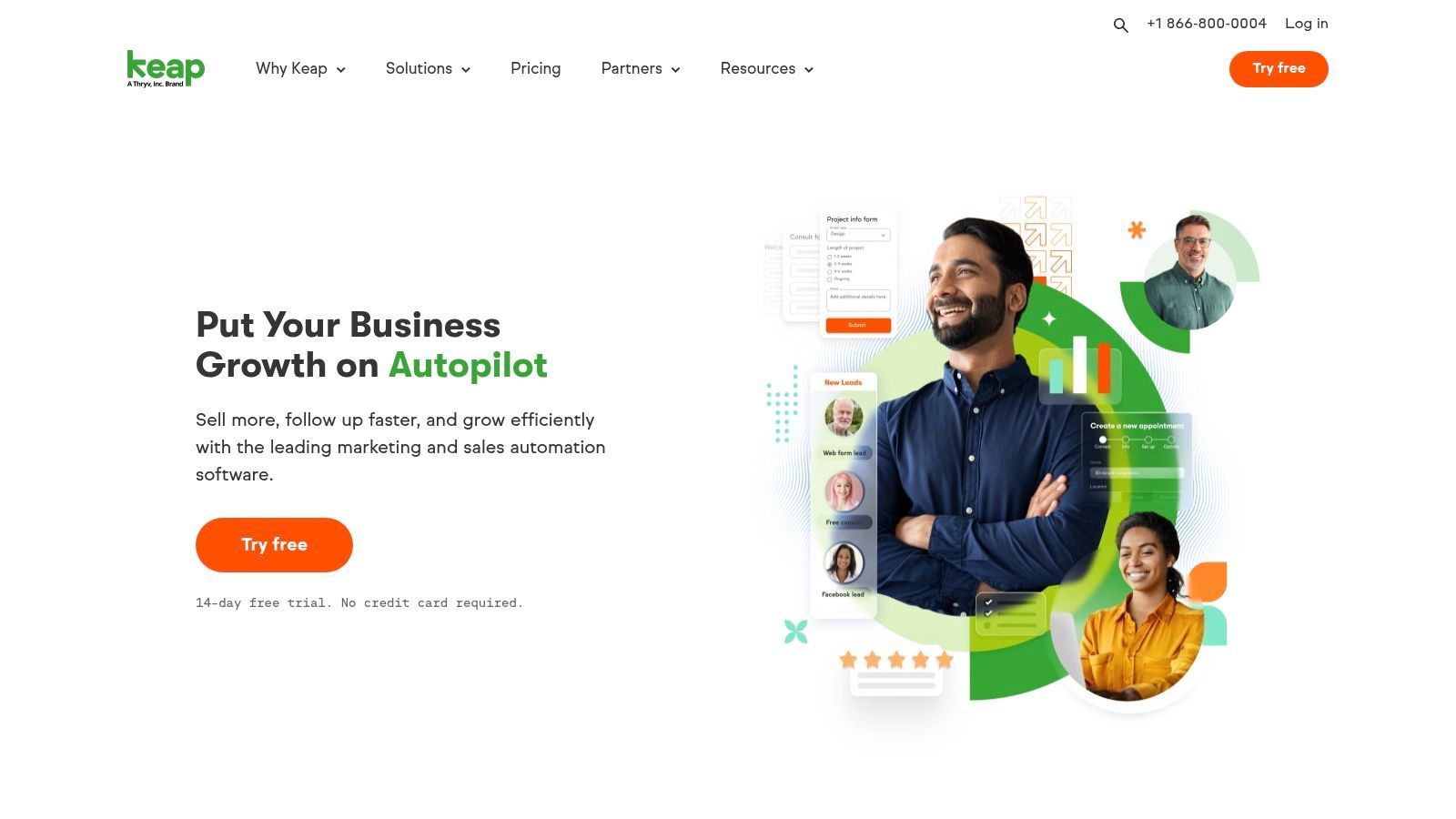
The platform is an excellent fit for small business owners who need more than just a sales pipeline and want to automate their entire client lifecycle. By combining CRM, email/SMS marketing, invoicing, and scheduling, Keap reduces the need for multiple disparate tools. The visual automation builder is a standout feature, allowing business owners to map out complex customer journeys without needing to write code. This makes it a strong contender for the best CRM for lead generation for businesses that require robust automation to handle leads from initial contact through to billing. The inclusion of dedicated customer success managers on many plans also provides valuable, personalized support.
Key Features & User Insights
- Ideal For: Service-based small businesses and solopreneurs who need a unified platform to manage marketing, sales, and client payments.
- Pricing: Plans start at $159/month for 2 users and 1,500 contacts. Pricing scales based on contact and user counts. A 14-day free trial is available.
- Pros: Powerful out-of-the-box automation designed for SMBs. The platform effectively combines CRM, marketing, and billing functionalities, simplifying the tech stack.
- Cons: There is no permanent free plan, and the price point can be high for very small startups. It has fewer deep enterprise integrations compared to larger CRM suites.
8. ActiveCampaign
ActiveCampaign positions itself as a customer experience automation platform, blending its powerful marketing automation with a user-friendly sales CRM. This makes it one of the best CRM for lead generation options for businesses whose sales process is heavily driven by email marketing and nurturing sequences. Its strength lies in its visual workflow builder, which allows users to design sophisticated, multi-channel automation that can score leads, segment contacts, and trigger sales tasks based on prospect behavior like email opens, site visits, or form submissions. This ensures that sales teams engage with leads at the optimal moment with full context.
We may earn a commission if you sign up for ActiveCampaign through the link above, at no extra cost to you.
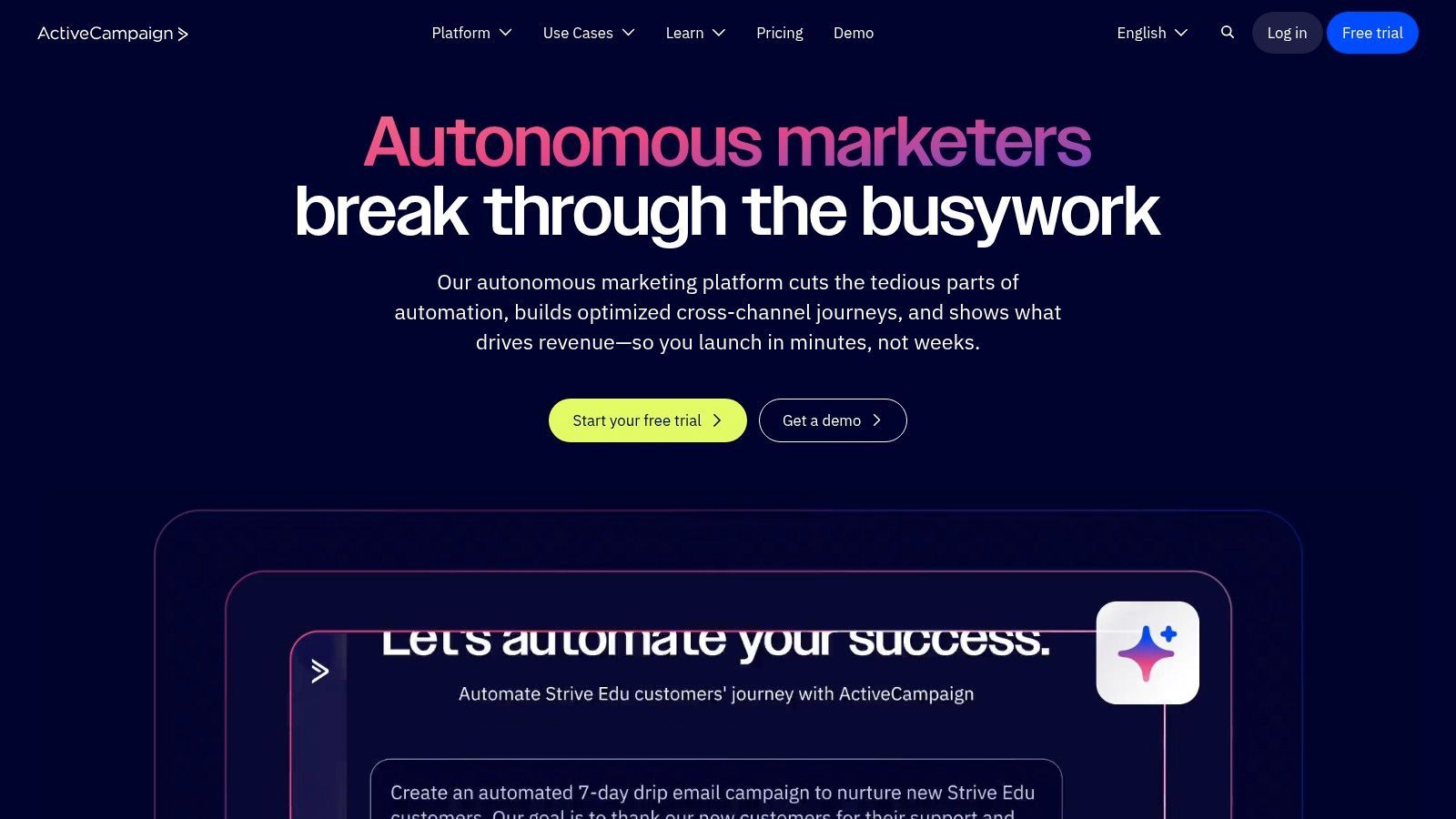
The platform truly shines for SMBs and mid-market companies that need enterprise-grade automation without the enterprise-level price tag. The integrated CRM provides a clear view of each lead's journey through visual pipelines, and AI-powered features help with predictive sending and win probability. While the initial setup can be more involved than simpler CRMs, the depth of its automation capabilities offers a significant return on investment for teams committed to creating a highly personalized lead-to-customer journey. You can explore how to get the most out of ActiveCampaign to streamline these complex workflows.
Key Features & User Insights
- Ideal For: SMBs and mid-market businesses that rely heavily on email and multi-channel marketing automation to nurture leads through a complex sales funnel.
- Pricing: Plans are contact-based. The Sales Plus plan, which includes the CRM and automation, starts at $23/user/month. Marketing and Bundled plans are also available.
- Pros: Best-in-class visual automation builder provides immense flexibility and power. The contact-based pricing model scales predictably as your business grows.
- Cons: Can be complex to configure initially, and the most valuable features are in higher-tier plans. The interface can feel overwhelming for complete beginners.
9. Microsoft Dynamics 365 Sales
Microsoft Dynamics 365 Sales stands out for enterprise-level organizations that are deeply integrated into the Microsoft ecosystem. Its strength as a CRM for lead generation comes from its native connectivity with tools like Outlook and Teams, allowing sales reps to capture and manage leads without leaving their daily workflow. The platform leverages AI through Copilot to provide intelligent recommendations, automate data entry, and score leads, which helps sales teams prioritize high-potential opportunities efficiently and effectively.
This CRM is built for scalability and security, making it a strong choice for larger businesses with complex sales processes and strict governance requirements. Its customization capabilities allow organizations to tailor workflows, data fields, and reporting to their specific needs. While the implementation can be more involved than with SMB-focused CRMs, the payoff is a powerful, unified system that provides deep visibility into the entire sales pipeline. For teams already using Microsoft 365, the seamless experience and data flow between applications create significant operational efficiencies.
Key Features & User Insights
- Ideal For: Enterprise and mid-market companies heavily invested in the Microsoft 365 ecosystem that require a scalable, secure, and highly customizable CRM.
- Pricing: Plans start at $65/user/month (Sales Professional), with higher tiers for enterprise features, AI, and sales intelligence.
- Pros: Unmatched integration with Outlook, Teams, and the broader Microsoft stack. Highly scalable and secure, with powerful AI and automation features.
- Cons: The implementation process can be complex and resource-intensive. Pricing and licensing structures are more complicated than many competitors.
Visit Microsoft Dynamics 365 Sales
10. Close
Close carves out its niche as a best CRM for lead generation by focusing intensely on high-velocity outbound sales teams. Its core strength is the tight integration of communication tools directly into the CRM workflow. With native calling, SMS, and email functionalities built-in, sales reps can execute outreach cadences at speed without ever leaving the platform. This all-in-one communication hub is designed to eliminate friction and maximize the number of prospect touches an SDR or AE can make in a day, turning lead lists into active conversations with unparalleled efficiency.
The platform is purpose-built for teams that live on the phone and in their email inbox. Features like the Power Dialer and Predictive Dialer automate the manual work of calling, allowing reps to move from one call to the next seamlessly. All activity, from call recordings to email opens, is automatically logged on the contact's timeline, providing a complete, chronological view of every interaction. This focus on sales execution makes Close an excellent choice for businesses that need to rapidly qualify and engage a high volume of leads with a lean and agile sales team.
Key Features & User Insights
- Ideal For: High-velocity outbound sales teams, SDRs, and SMBs that prioritize calling and multi-channel communication for lead engagement.
- Pricing: Starts at $9/user/month billed annually (Solo, one user), with Essentials ($35), Growth ($99, adds the Power Dialer and automated workflows) and Scale ($139, adds the Predictive Dialer) per user per month billed annually; calling and SMS are billed on usage (prices checked September 2026).
- Pros: Unmatched for its built-in telephony and communication tools, which streamlines SDR and AE workflows. The transparent pricing and quick onboarding process allow teams to get started quickly.
- Cons: Lacks the deep marketing automation features found in other platforms, focusing almost exclusively on sales execution. Add-on costs for features like the AI call assistant and phone numbers can increase the total price.
11. G2 (Lead Management Software category)
While not a CRM itself, G2’s Lead Management Software category is an indispensable resource for anyone researching the best CRM for lead generation. It serves as a comprehensive, user-driven marketplace where you can discover, compare, and vet hundreds of platforms side-by-side. Its primary value lies in the volume of verified, real-world user reviews, which provide unfiltered insights into a tool's strengths and weaknesses for specific use cases like lead capture, routing, and scoring. This allows you to look beyond marketing claims and understand how a CRM performs in practice.
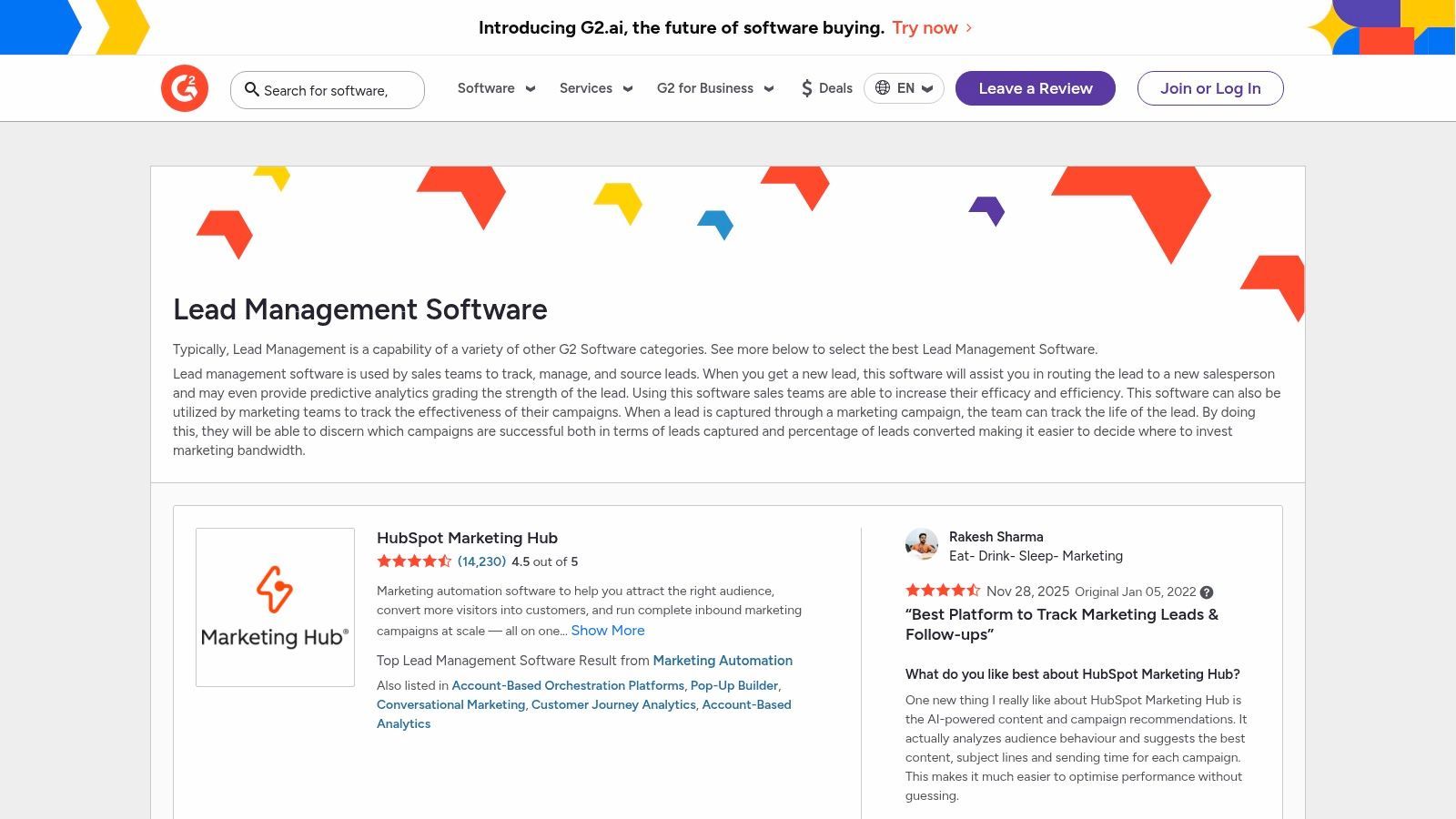
The platform’s powerful filtering system lets you narrow down options by company size, industry, specific features, and user satisfaction ratings, making it easy to create a personalized shortlist. You can compare up to four products directly, evaluating their features, pricing models, and review scores in a clear grid format. By focusing on recent reviews, you can gauge a product's current momentum and the quality of its latest updates. G2 is the ideal starting point for your research, ensuring your final decision is based on both vendor promises and peer-validated performance.
Key Features & User Insights
- Ideal For: Any business leader, sales manager, or RevOps professional conducting due diligence to find a CRM that fits their specific lead generation needs.
- Pricing: Free to browse and use for research. Vendors may have sponsored placements, but reviews are independently verified.
- Pros: Access to a vast library of verified user reviews provides honest, real-world feedback. The side-by-side comparison tool is excellent for shortlisting top contenders.
- Cons: The sheer number of options can be overwhelming. Be mindful of sponsored placements and always check review recency, as ratings can change quickly.
Start your 7-day free trial of Standard
Find verified emails, phone numbers, and job titles on LinkedIn®. Add contacts to any of 29+ supported CRMs in one click.
Start Free TrialTrusted by 2,500+ users4.712. Capterra (Lead Management Software directory)
While not a CRM itself, Capterra’s lead management software directory is an invaluable research tool for finding the best CRM for lead generation that fits your specific needs. As a comprehensive software marketplace from Gartner Digital Markets, it allows you to compare hundreds of solutions side-by-side. Its strength lies in its robust filtering system, letting you shortlist vendors based on pricing models, features, company size, and user ratings. This makes it an essential first stop for building a list of potential CRMs before committing to demos or trials.
Capterra is best used for discovery and validation. You can quickly identify niche players and established leaders, read verified user reviews to understand real-world performance, and access buyer guides to learn about key features. The platform provides direct "Visit Website" links, making it easy to navigate to official vendor pages for trials or pricing information. This saves significant time during the research phase and helps teams make a more informed decision by comparing a wider array of options than they might otherwise discover.
Key Features & User Insights
- Ideal For: Teams in the initial research phase who need to identify and compare a wide range of CRM vendors and read authentic user reviews before shortlisting.
- Pricing: Free to use for software buyers. Vendors pay for placement and leads.
- Pros: An extensive, free-to-use directory that helps discover alternatives and links directly to official vendor trial pages. User reviews offer valuable real-world insights.
- Cons: Sponsored listings can influence visibility, and pricing information on profiles can sometimes be outdated. Always verify details directly on the vendor's website.
Visit Capterra
Top 12 Lead-Gen CRM Comparison
| Product | Target audience | Core strengths | Unique selling point | Pricing / tier notes |
|---|---|---|---|---|
| HubSpot | Teams wanting an easy free entry and scalable stack | Built-in lead capture, strong automations, reporting | Free CRM + integrated marketing/sales ecosystem | Free CRM tier; paid Sales Hub scales with users/contacts |
| Salesforce Sales Cloud | Large enterprises & complex sales orgs | Deep lead routing, forecasting, AppExchange ecosystem | Highly configurable with enterprise-grade governance | Higher TCO; complex pricing and admin required |
| Zoho CRM | SMBs and small teams on a budget | Lead capture, scoring (Zia), Zoho suite integrations | Generous free tier and suite expansion options | Free for up to 3 users; competitive paid tiers |
| Pipedrive | Outbound SMB sales teams & reps | Visual pipeline UI, LeadBooster, built-in email | Simple, fast adoption for sales teams | Transparent pricing; some lead tools are paid add-ons |
| Freshsales (Freshworks CRM) | Startups and small teams needing omnichannel | Native chat, email, telephony, Freddy AI insights | Omnichannel communications out-of-the-box | Low entry price; advanced AI on higher tiers |
| monday sales CRM | Teams wanting custom pipelines and ops alignment | Custom boards, automation builder, dashboards | Flexible Work OS to unify sales and post-sale workflows | Pricing requires minimum seats; can be complex |
| Keap | Small businesses needing CRM + marketing + billing | Visual automations, email/SMS, invoicing, scheduling | CRM + marketing + payments in one platform | No permanent free plan; pricing scales by users/contacts |
| ActiveCampaign | SMBs/mid-market focused on email-driven growth | Advanced automation, lead scoring, omnichannel messaging | Best-in-class automation depth for nurture at scale | Contact-based pricing; packaging may require sales |
| Microsoft Dynamics 365 Sales | Microsoft-centric enterprises | Lead/opportunity management, Copilot AI, Teams/Outlook nativity | Native Microsoft 365 integration and enterprise security | Scalable but complex licensing and implementation |
| Close | Outbound SDRs and high-velocity sales teams | Native calling/SMS, dialers, automated workflows | Telephony-first CRM optimized for fast outreach | Transparent per-seat pricing; add-ons for AI/phone numbers |
| G2 (Lead Mgmt category) | Buyers researching CRM/lead tools | Verified user reviews, side-by-side comparisons, filters | Large review marketplace with trial/vendor links | Free to browse; some sponsored placements |
| Capterra (Lead Mgmt directory) | Buyers shortlisting software options | Large catalog, buyer guides, trial/pricing filters | Long-standing directory with Gartner backing | Free to use; sponsored listings may affect visibility |
Final Thoughts: Building Your Lead Generation Powerhouse
We've explored a comprehensive landscape of platforms, each claiming to be the best CRM for lead generation. From the all-in-one marketing and sales ecosystem of HubSpot to the enterprise-grade power of Salesforce and the nimble, sales-focused design of Pipedrive, the perfect solution is rarely a one-size-fits-all answer. Your ideal CRM is the one that aligns seamlessly with your team's specific workflow, business size, and growth ambitions.
The journey doesn't end with selecting a platform. The real power is unlocked when your chosen CRM becomes the central, undisputed source of truth for your entire lead management process. This is where strategic implementation and process discipline become paramount.
Key Takeaways for Selecting Your CRM
Remember that the "best" tool is the one your team will actually use consistently. As you make your final decision, distill your evaluation down to these core principles:
- Process Over Platform: Before anything else, map out your ideal lead generation and follow-up process. Where do leads come from? What are the key stages of qualification? Who is responsible for each step? The right CRM will support and automate your process, not force you into a rigid, unfamiliar one.
- Adoption is Everything: A complex CRM with a steep learning curve can quickly become expensive, unused shelfware. Prioritize user experience (UX) and intuitive design, especially for smaller teams. Look for CRMs like Freshsales or monday sales CRM that are known for their user-friendly interfaces.
- Scalability Matters: Your startup or small business won't stay small forever. Consider the platform's ability to grow with you. Does it offer higher-tier plans with more advanced features? How easily can it accommodate more users, data, and complex automation as your needs evolve? Platforms like Zoho CRM and Salesforce are built for this kind of long-term scalability.
Actionable Next Steps to Build Your Lead Gen Engine
Choosing a CRM is just the first step. To truly build a lead generation powerhouse, you need to focus on how data gets into that system efficiently and accurately.
- Define Your "Lead-Ready" Criteria: Work with your sales and marketing teams to create a clear, documented definition of a qualified lead. This ensures everyone is aligned and that the data entering your CRM is high-quality from the start.
- Prioritize Workflow Automation: Identify the most repetitive tasks in your lead generation process. This could be data entry from social profiles, lead assignment, or sending initial follow-up emails. Leverage your CRM's automation capabilities to handle these tasks, freeing up your team for high-value activities.
- Integrate Your Prospecting Tools: The most significant bottleneck in lead generation is often the manual transfer of information from prospecting platforms (like professional networking sites or company websites) into your CRM. This is where a critical workflow enhancement tool becomes essential. The goal is to eliminate copy-paste and ensure data is captured in real-time, right at the source.
Ultimately, the best CRM for lead generation is the one that becomes an invisible, indispensable part of your team's daily rhythm. It should reduce friction, provide clarity, and empower your sales development reps to do what they do best: build relationships and close deals. By focusing on your unique processes and prioritizing tools that enhance, rather than complicate, your workflow, you can build a truly formidable lead generation engine.
Ready to eliminate the biggest time-waster in prospecting? Add to CRM bridges the gap between your lead sources and your CRM, allowing you to capture, enrich, and add contacts with a single click, directly from your browser. Stop the manual data entry and ensure every valuable lead makes it into your pipeline by trying Add to CRM today.
Some links in this article are affiliate links. We may earn a small commission if you sign up, at no extra cost to you.
Start saving time and closing more deals.
Find verified contact info for your prospects on LinkedIn®, Gmail and Outlook — and add them to your CRM with 1-click.

 Loading...Trusted by 2,500+ founders, SDRs & more