What Is Outbound Sales and How Does It Drive Growth?
Understand what is outbound sales and why it's a powerful growth engine. This guide explores strategies, channels, and metrics for predictable revenue.
Published on December 21, 2025
Outbound sales is all about proactively hunting for potential customers who haven't—and might never have—found you on their own. Instead of waiting for buyers to come knocking, your sales team makes the first move, reaching out through channels like cold calls, emails, or social media.
What Is Outbound Sales Really
Think of it like fishing. You could sit on the dock and wait for fish to swim by—that’s your inbound strategy. Or, you could get in a boat, head to where the best fish are known to be, and start casting your line.

That proactive, targeted approach is the soul of outbound sales. It's a hands-on method where your reps take control of the conversation right from the start.
This strategy is especially powerful in crowded or competitive markets. Why hope your ideal customers stumble upon your website when you can identify them first? Outbound gives you direct control over building your sales pipeline, letting you focus your energy on high-value accounts that are a perfect fit for what you sell.
The Core Idea Behind Outbound
At its heart, outbound sales runs on a simple premise: your best potential customers might not know you exist. Or, they might not even be actively looking for a solution to a problem they have. Your goal is to interrupt their status quo in a helpful, relevant way.
Outbound isn't about aggressive, irrelevant pitching. Modern outbound sales is a highly strategic function focused on delivering the right message to the right person at the right time to start a valuable conversation.
This means the process is way more than just dialing for dollars. It involves a few key activities:
- Identifying Ideal Prospects: It all starts with a crystal-clear Ideal Customer Profile (ICP). Sales teams research and pinpoint companies and individuals who stand to gain the most from their product.
- Initiating Contact: Sales Development Representatives (SDRs) then reach out directly. This isn't a random blast; it's a calculated first touch designed to be personal and relevant.
- Educating and Qualifying: The initial outreach aims to teach the prospect something about a problem they might have and quickly qualify whether there's a potential fit. This is all about building awareness and seeing if there's any interest.
- Building Relationships: Great outbound campaigns build relationships over time. It takes multiple touchpoints to establish trust and credibility long before a sale is ever on the table.
Outbound vs. Inbound Sales: A Strategic Comparison
To really get what outbound sales is all about, it helps to put it side-by-side with its counterpart, inbound sales.
Think of it this way: outbound is like spear fishing. You identify a specific, high-value fish, aim carefully, and go directly after it. Inbound is more like building a vibrant coral reef right off your dock. You create an amazing habitat and wait for the right fish to swim to you. Both work, but they run on totally different playbooks.
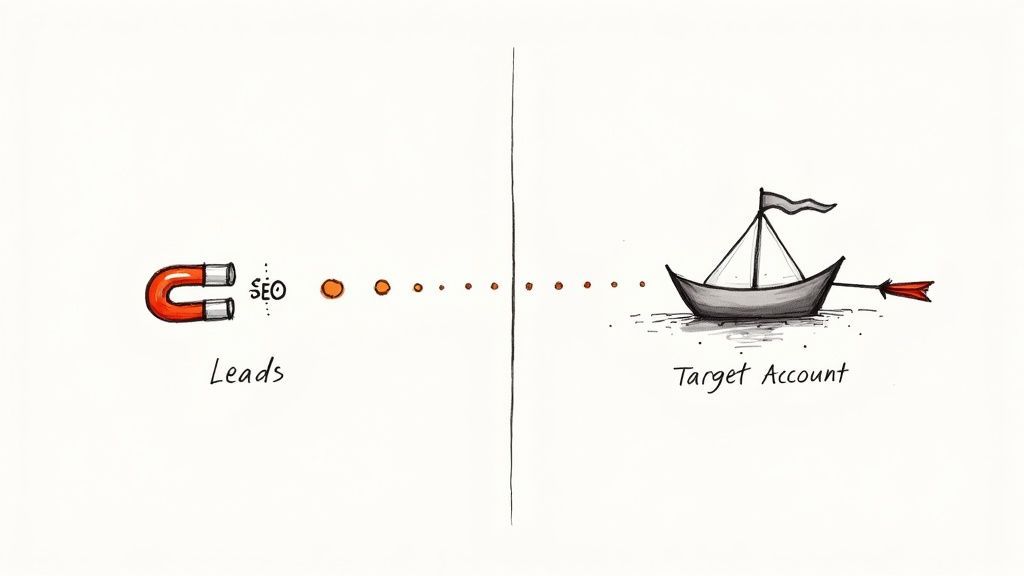
Inbound sales works by creating valuable stuff—blog posts, videos, helpful guides—and using Search Engine Optimization (SEO) to get found. Prospects stumble upon your company while looking for solutions to their problems. Because they found you, they arrive with some awareness and interest, making them "warm" leads.
Outbound sales, on the other hand, is about proactively going after potential customers. Your team makes the first move, often before the prospect has even thought about a solution like yours. This direct approach puts you in the driver's seat, letting you control who you talk to and when. It’s a much faster way to get feedback and start filling your pipeline.
Comparing Core Philosophies
The real strategic split is about control versus attraction. Outbound gives your sales team total control over targeting. This is perfect for testing a new market, going after a list of dream enterprise clients, or just getting results now without waiting for marketing to build momentum.
Inbound is all about building a long-term, scalable asset. The content and brand authority you develop become a lead-generating machine that works for you around the clock, often with a lower cost-per-lead over time. It’s a marathon. Outbound can deliver results in a sprint.
The question isn't which one is "better," but which is right for your goals right now. Outbound offers speed and precision, while inbound builds a sustainable engine for growth. The smartest companies use a mix of both.
Key Differences Between Outbound and Inbound Sales
Laying out the differences side-by-side really clarifies the unique strengths and trade-offs of each approach. Getting this right is key to assigning your budget and setting expectations that your sales and marketing teams can actually hit.
| Attribute | Outbound Sales | Inbound Sales |
|---|---|---|
| Initiator | The seller initiates contact with the prospect. | The prospect initiates contact with the seller. |
| Approach | Proactive and direct (hunting). | Passive and magnetic (farming). |
| Lead Temperature | Cold; prospects are typically unaware of you. | Warm; prospects have shown interest. |
| Time to Results | Fast; can generate pipeline in 30-90 days. | Slow; often takes 6-12 months to build momentum. |
| Primary Channels | Cold calls, cold emails, social selling. | SEO, content marketing, social media posts. |
| Scalability | Linear; scales with sales team headcount. | Exponential; content assets attract leads indefinitely. |
| Cost Dynamics | Higher initial cost per lead, predictable budget. | Lower long-term cost per lead, variable upfront investment. |
In the end, top-performing teams know these strategies aren't mutually exclusive—they’re two sides of the same coin. In fact, a massive 80% of top sales teams rely on outbound as a core part of their strategy. Many adopt a hybrid model, using inbound content to warm up the prospects they plan to target with outbound. This powerful combo lets you actively hunt for big accounts while building a brand that naturally draws customers in.
Your Toolkit for an Outbound Strategy
A winning outbound strategy isn't about finding one magic bullet. It's about orchestrating a coordinated effort across several channels at once. Think of it less like a solo artist and more like a full band—cold calls, emails, and social selling all play their part, but the real magic happens when they work together.
Success means ditching one-off messages and building a multi-touchpoint sequence instead. This is how you build familiarity and trust, turning a cold shoulder into a warm conversation. A prospect might delete your first email, but then they see your thoughtful comment on their social media post. Suddenly, that follow-up call a few days later doesn't feel so cold anymore.
The Core Outbound Channels
Modern sales teams lean on a blend of proven methods to get in front of prospects. Each has its own strengths, and mastering them all gives you a massive advantage.
- Cold Calling: The old-school direct approach. It's powerful because you get immediate feedback and can have a real conversation, letting you qualify interest and build rapport in minutes.
- Email Sequences: The engine of scalable, personalized outreach. A well-written email sequence can deliver value, educate prospects, and nudge them toward a conversation on their own time.
- Social Selling: This is all about using professional networking platforms to research, connect, and engage. You're not just pitching; you're building credibility by sharing valuable content and joining relevant conversations before you ever ask for a meeting.
This multi-channel approach is so important because, frankly, persistence is everything. Personalized outbound outreach can boost response rates by 26%, and a targeted approach brings in 50% higher conversion rates than spray-and-pray tactics.
Even more telling? A staggering 80% of sales require between 5-12 touchpoints. Only 2% ever close on the very first contact. The data from EmailAnalytics.com is clear: you have to stay in the game.
Crafting a Winning Approach
Just using these channels isn't enough. It's the quality of your execution that separates the pros from the amateurs. In today's noisy world, a generic, high-volume strategy is a fast track to failure. The only way to win is with a value-first mindset built on personalization and relevance.
The goal of modern outbound isn't to interrupt a prospect's day—it's to become a welcome and valuable part of it. Every email, call, and message should be tailored to the recipient's specific role, industry, and pain points.
This means you have to do your homework. Before you hit send or dial, understand the company's recent wins or challenges. Reference an article they just published or congratulate them on a promotion. That small bit of detail shows you've invested time and effort, instantly setting you apart from the dozens of generic templates flooding their inbox.
Of course, tracking all these personalized touchpoints is where having the right tools becomes non-negotiable. Check out our guide on the best outbound sales CRMs to see how you can keep your strategy organized and effective. This high-effort, personalized approach isn't optional—it's what outbound sales is all about.
Building Your Outbound Sales Playbook
Great outbound sales isn't about getting lucky—it's the direct result of a smart, repeatable process. An outbound sales playbook is what turns random prospecting into a scalable engine for hitting your revenue targets. It’s the roadmap your team follows for every single interaction.
The bedrock of any solid playbook is defining your Ideal Customer Profile (ICP). This isn't just about basic demographics; it's a deep dive into the perfect company you want to work with. Before you even think about writing an email, you have to know exactly who you're trying to reach.
Define Your Ideal Customer Profile
Think of your ICP as the blueprint for your entire outbound strategy. If this profile is fuzzy or too broad, you'll burn countless hours chasing prospects who were never going to buy in the first place. A sharp, well-defined ICP focuses your team's energy where it matters most: on high-potential accounts.
To get started, look at your happiest customers. What do they have in common?
- Industry or Vertical: Are your best clients all SaaS companies? Manufacturers? Local service businesses?
- Company Size: Do you crush it with scrappy startups, mid-market players, or massive enterprises?
- Geography: Are they clustered in a specific city, region, or country?
- Pain Points: What specific, nagging problem do you solve for them better than anyone else?
This profile becomes your North Star, guiding every prospecting decision and shaping every message you send.
Building and Executing Your Outreach
Once you know who you’re looking for, it's time to build a high-quality list of prospects. This means finding companies that match your ICP and then identifying the key decision-makers inside those organizations.
This is where a professional networking site becomes your best friend. Its filters let you zero in on specific job titles, industries, and company sizes with incredible precision. To really get the most out of it, check out our guide on using LinkedIn Advanced Search for some powerful techniques to find exactly who you need, fast.
From there, you’ll want to layer your outreach across multiple channels in a coordinated sequence. The diagram below shows how these pieces often fit together.
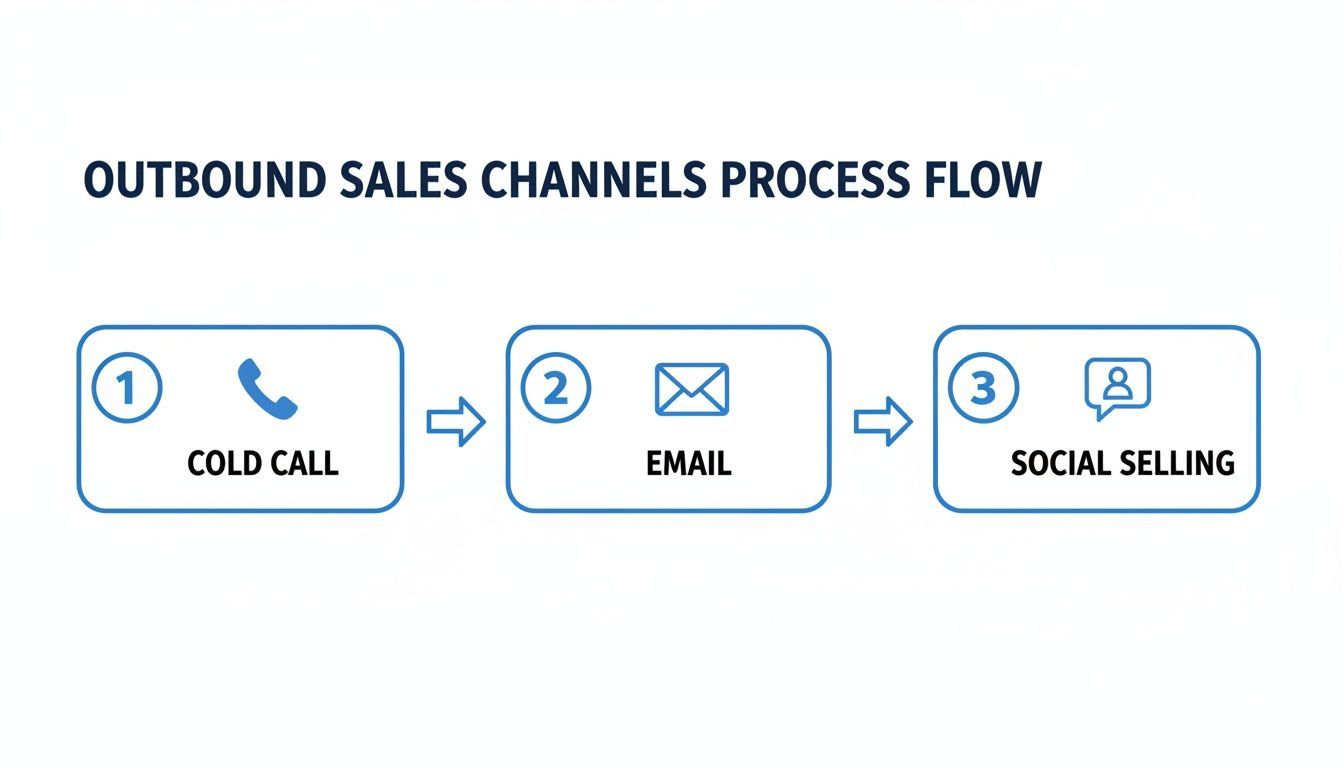
As you can see, cold calling, email, and social selling aren't standalone tactics. They're interconnected steps in a bigger strategy. By hitting a prospect on multiple fronts, you create more opportunities to connect, building familiarity and trust with every touchpoint. This systematic approach is the heart of a truly effective outbound playbook.
Measuring What Matters in Outbound Sales
If you aren't measuring your outbound sales efforts, you're just guessing. To turn your strategy into a predictable revenue engine, you have to focus on the key performance indicators (KPIs) that actually signal a healthy pipeline. It’s all about cutting through the noise and zeroing in on the metrics that drive real results.

The right data tells a story. It shows you what’s working, what’s broken, and where to double down. Good metrics help you diagnose problems early, fine-tune your outreach, and forecast with confidence.
Core Outbound Sales Metrics
To get a clear picture of performance, you really only need to track a handful of essential KPIs. These give you a top-to-bottom view of your funnel, from that first cold email to a closed deal. Monitoring these numbers is a massive part of improving your team's overall productivity. To learn more, check out our guide on how to boost efficiency in sales.
These are the metrics that matter most:
- Reply Rate: The percentage of people who actually respond to your messages. A low rate is a huge red flag that your messaging or your targeting is off.
- Meetings Booked: This is the immediate goal of any outreach. It tells you how good your team is at turning a simple conversation into a qualified appointment.
- Opportunity Creation Rate: How many of those meetings convert into legitimate sales opportunities in your pipeline? This number separates the tire-kickers from the serious buyers.
- Close Rate: The bottom line. What percentage of your opportunities become paying customers? This metric speaks to the effectiveness of your entire sales process.
Calculating Your Return on Investment
Beyond just tracking activity, you need to understand the financial health of your outbound engine. Two critical numbers here are the Sales Cycle Length and Customer Acquisition Cost (CAC). Knowing how long it takes to close a deal and exactly how much you spent to land that customer is what proves your ROI.
This data-driven approach is why outbound remains so powerful. A huge 78% of B2B decision-makers still see it as essential, with 39% viewing it as their core engine for hitting revenue targets. They value high-quality targeting above all else, which is backed by data showing that a well-run outbound campaign can build a pipeline in just 30-60 days. You can find more B2B outreach stats and insights from this MarketingProfs study.
The Future of Prospecting Is Hybrid
The old debate of outbound versus inbound is officially over. The smartest, most resilient sales teams figured out they don’t have to pick a side—they blend both into a powerful hybrid model.
This isn’t just about doing two things at once. It’s about creating a flywheel where each strategy makes the other stronger. Think about it: you can use your valuable inbound content, like blog posts and webinars, to warm up a cold prospect list before you ever send that first email.
When your outreach finally lands in their inbox, it’s not from a stranger. It's from a familiar name that’s already provided value.
Creating a Unified Sales Engine
A hybrid model demolishes the walls between sales and marketing. Instead of working in separate silos, they team up to create a seamless customer journey. This means every interaction, whether the buyer starts it or you do, feels connected and relevant.
One of the best ways to pull this off is with Account-Based Marketing (ABM). In an ABM world, sales and marketing huddle up to target a specific list of high-value dream accounts. Marketing warms them up with targeted ads and personalized content, while sales runs highly tailored outbound sequences.
This coordinated attack ensures your most important prospects hear a consistent, compelling message across multiple channels, dramatically increasing the chances of booking that first meeting.
The numbers back this up. By 2025, an estimated 43% of sales teams will adopt a hybrid model, and 37% will still have dedicated outbound squads—proving that proactive outreach isn't going anywhere. Better yet, ABM supercharges these efforts, with 61% of companies reporting higher-quality pipelines when they align sales and marketing. You can learn more about how modern sales is evolving from Outreach's 2025 prospecting report.
The Role of Modern Sales Technology
What’s fueling this hybrid future? Intelligent sales tech. Today’s tools and AI aren’t just nice-to-haves; they’re essential for running a sophisticated sales strategy at scale.
These platforms automate the soul-crushing tasks that bog down reps, like data entry and manual research. This frees them up to focus on what humans do best: building relationships and having great conversations.
AI can crunch massive amounts of data to give reps deeper insights, helping them personalize their outreach with uncanny precision and timing. By embracing a hybrid model powered by modern tech, you're building a sales organization that’s not just effective today, but also resilient enough to handle whatever comes next.
Outbound Sales FAQs: Your Top Questions, Answered
Even with a solid plan, a few common questions always surface when teams think about what outbound really means for them. Let's tackle these head-on to clear up any confusion before you dive in.
Isn't Outbound Sales Dead or Too Aggressive?
Not a chance. What is dead are the old-school, spammy tactics of blasting a generic message to thousands of people. That approach rightfully fell out of favor.
Modern outbound sales is the complete opposite. It’s all about highly personalized, value-first outreach. When you do it right, you're not annoying people; you're starting helpful conversations with specific individuals you genuinely believe can benefit from what you offer. The game has shifted from high volume to high precision, making it an essential channel for any B2B company that needs to connect with decision-makers who aren't just going to stumble upon their website.
How Long Does It Take to See Results?
This is one of the best parts about outbound. While inbound marketing is a long game—often taking six to twelve months to really gain traction—outbound gives you feedback much, much faster.
Most teams with a well-structured campaign start seeing positive replies and booking meetings within the first 30 to 60 days.
This speed-to-pipeline is a massive advantage. The magic lies in a consistent, repeatable process. When you nail down everything from list building to your follow-up sequences, your daily activities start turning into predictable results.
What Are the First Steps to Starting an Outbound Strategy?
Before you write a single email, your absolute first step is to nail down your Ideal Customer Profile (ICP). Get painfully specific about who your best customers are. Think about their industry, company size, job titles, and—most importantly—the pain points you solve for them. A crystal-clear ICP saves you from wasting countless hours on prospects who were never going to be a good fit.
Once your ICP is locked in, follow this simple game plan:
- Build a small, hyper-targeted list. Forget massive spreadsheets. Start with a curated list of 50-100 prospects who are a perfect match for your ICP. Quality over quantity, always.
- Craft a simple, personal message. Write a short, direct email sequence that focuses on their world and their potential problems. Ditch the generic sales pitch entirely.
- Test, measure, and tweak. Launch your small campaign, pay close attention to reply and meeting rates, and use that early feedback to refine your messaging before you even think about scaling up.
Prospecting is faster when you don't have to copy-paste. Add to CRM turns any social or email profile into a clean CRM record in one click, saving you hours every week. Find out how at https://addtocrm.com.
Start saving time and closing more deals.
Find contact info for your prospects on the #1 business social network and add them to your CRM with 1-click.

 Loading...



Trusted by 1000s of founders, SDRs & more
