12 Best Apollo Alternatives for B2B Prospecting in 2026
Apollo bundles a database, dialer, and sequences into one tool — but credit overages, email bounce rates, and patchy international data send plenty of teams looking. Here are the 12 best alternatives, and who each one is genuinely for.
TL;DR: Apollo bundles a contact database, email finder, dialer, and sequences into one tool with a generous free plan — but credit overages, export bounce rates, and weaker international data are why teams look elsewhere. Want a cheaper all-in-one? Look at the data platforms below. Realised you just need verified contacts in your CRM without the credit games? Add to CRM is the most focused switch. Stay on Apollo if you genuinely want the database and built-in outreach in one place.
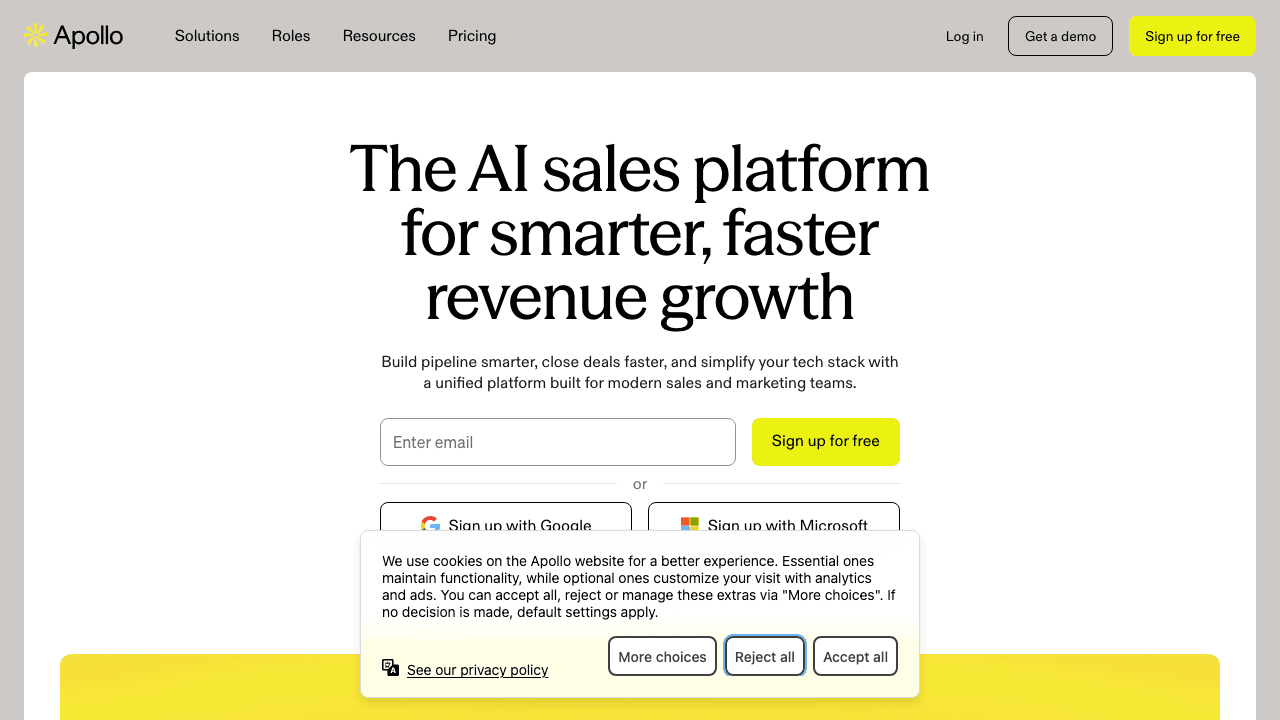
Apollo.io is one of the most popular sales-intelligence tools for a reason: it folds a 275M-contact database, an email finder, a dialer, and email sequences into a single platform with a genuinely generous free plan. For a lot of SMB sales teams, that all-in-one bundle is exactly right.
But it isn't right for everyone — and a few recurring frustrations send teams looking for an alternative:
- Data accuracy vs. the marketing. Apollo advertises a huge database, but only a portion of it carries verified emails, and reviewers regularly report bounce rates higher than they expected on exported lists — especially outside the US.
- The credit math. Phone numbers and exports burn credits fast, and teams often find the effective monthly cost climbs well past the advertised per-seat price once overages are included.
- Patchy international data. EMEA and APAC phone/email coverage is widely cited as weaker than North America.
- Trust friction. Apollo scores well on G2 (4.7/5 from ~9,600 reviews) but far lower on Trustpilot (2.9/5 from ~1,000 reviews), where billing and cancellation complaints cluster.
If any of those pushed you here, the good news is that "Apollo alternative" doesn't mean one thing. Some teams want a bigger or cleaner database; some want better international or GDPR-compliant data; and some realise they never needed the all-in-one platform at all — they just want to capture good contacts and get them into their CRM without the credit games.
Below are the 12 best alternatives, grouped by the job they actually do, with honest notes on who each one suits — and who should stick with Apollo.
A note on pricing: figures below are entry tiers gathered in mid-2026 and change often. Check each vendor's pricing page for the current number before you commit.
Related: for a closer look at how Apollo's own email finder performs — accuracy, real-world deliverability, and the credit model — see our in-depth Apollo Email Finder review.
What to look for in an Apollo alternative
Before you switch, get clear on what you're actually optimising for — it changes the answer:
- The job you need. A full database + outreach platform, or just a clean way to capture verified contacts into your CRM? Don't pay for an outbound suite you won't use.
- Data accuracy & coverage. Test candidates on your ICP and regions — accuracy varies enormously by geography and company size. Don't trust headline percentages.
- True cost, not sticker price. Watch credit overages, phone-credit multipliers, and seat minimums — the effective monthly cost is often 2-3× the advertised tier.
- CRM & stack fit. How cleanly does it get data into your CRM, and does it support the CRMs you actually use?
- Compliance. If you sell into the EU/UK, GDPR-compliant data and verified consent matter.
1. Add to CRM
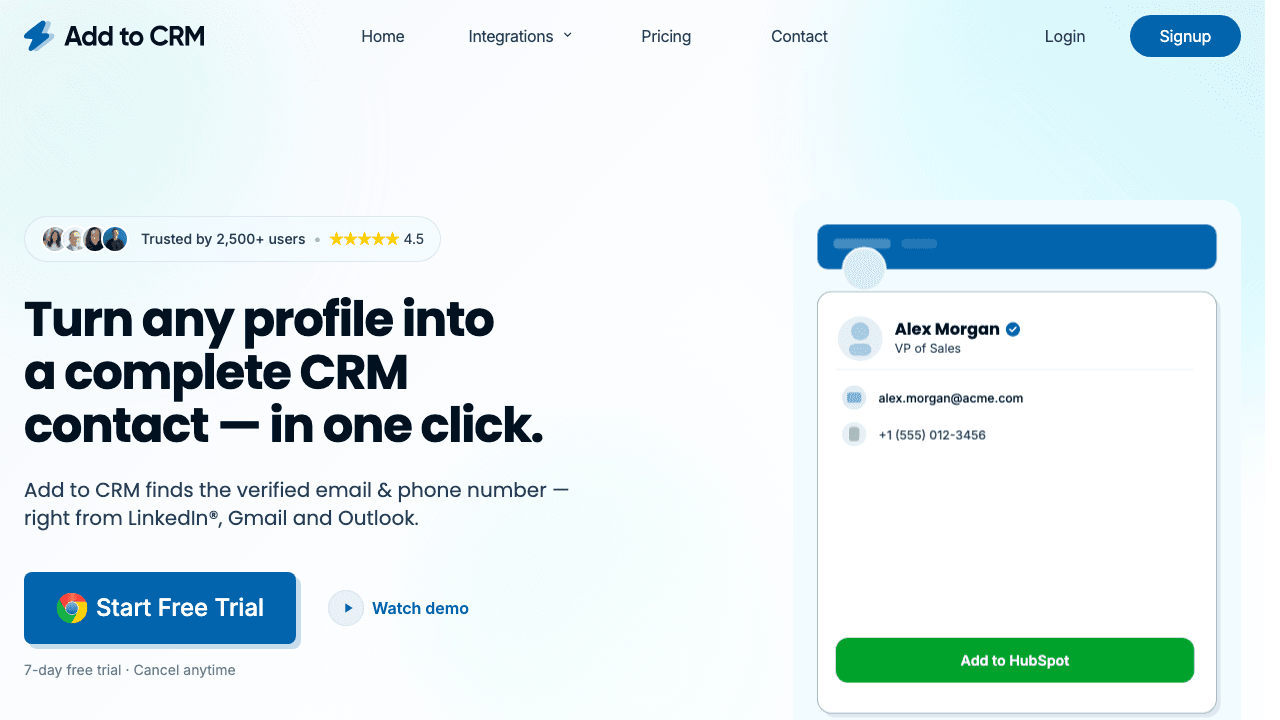
Best for: teams whose real bottleneck isn't finding data — it's getting verified contacts out of LinkedIn, Gmail, and Outlook and into their CRM, cleanly, in one click.
Here's the honest framing: Add to CRM is not a like-for-like Apollo replacement. It isn't a 275-million-record standalone database, and it doesn't ship a dialer or email sequencer. It's a Chrome extension that does one job extremely well — it enriches the person or company you're looking at (verified email + phone + 20+ data points) and pushes them straight into your CRM, with the fields mapped correctly and duplicates handled.
The reason it belongs at the top of an Apollo alternatives list is that a huge share of people who leave Apollo do so because they were paying for a database-and-outbound platform when what they actually needed was reliable capture-to-CRM. If that's you, Add to CRM removes the parts of Apollo you were fighting (credit overages, bounce rates on bulk exports, a second system to keep in sync) and keeps the part you wanted (a verified contact in your CRM, now).
Key strengths & use cases
- Works across 28+ CRMs — not just the big three. Capsule, Pipedrive, Copper, Close, Zoho, HubSpot, Salesforce, Monday, Attio, Nutshell, Salesflare and many more, all from one extension. Most rivals integrate with a handful.
- Three surfaces, not just LinkedIn. It works on LinkedIn, Gmail, and Outlook — so you can capture a contact from an email thread, not only a profile. (Apollo and most tools here are LinkedIn-only for capture.)
- One-click add with correct field mapping, tags, and activity logging — no copy-paste, no CSV round-trips.
- Verified emails checked in real time to cut bounces, plus GDPR-compliant B2B data.
Pricing and onboarding
- 7-day free trial, then paid plans with monthly enrichment credits (see the pricing page for current tiers).
- Install the extension, connect your CRM in one click (OAuth) or with an API key, and you're adding enriched contacts in a couple of minutes — no procurement cycle, no annual lock-in.
Choose Apollo instead if you specifically want a large standalone prospecting database plus a built-in dialer and email sequencer in one tool, and you're prepared to manage the credit model.
2. ZoomInfo
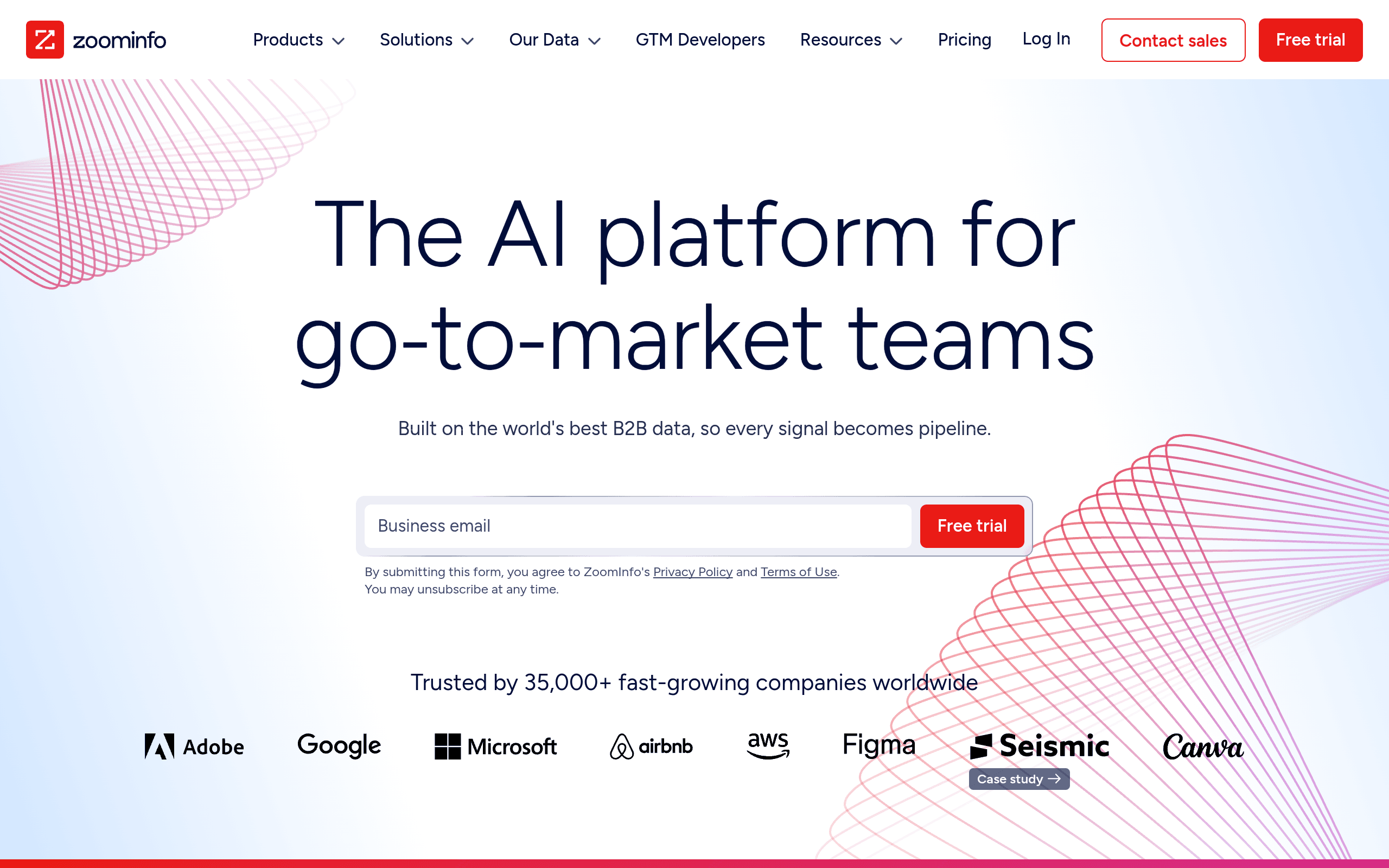
Best for: enterprise sales teams with $30k+/year budgets, a US-heavy market, and a need for deep account intelligence.
ZoomInfo is the database heavyweight — 300M+ contacts, rich firmographics and technographics, intent data, and the strongest support reputation in the category (frequently rated 10/10 on G2). It's the natural "trade up" from Apollo when data depth and account intelligence matter more than price.
- Strengths reviewers cite: the largest, deepest B2B dataset; excellent buying-signal and account data; strong integrations and support.
- Weaknesses reviewers cite: data can go stale (contacts listed at former employers); weaker non-US coverage; a steep learning curve; no monthly plans and 12-month+ contracts with renewal increases.
- Pricing: no free tier; Professional plans commonly start around $15k/year and real all-in cost (seats + credits + add-ons) often lands far higher.
Versus Apollo: more data and better support, but enterprise pricing and contracts — the opposite of Apollo's self-serve flexibility.
3. Lusha
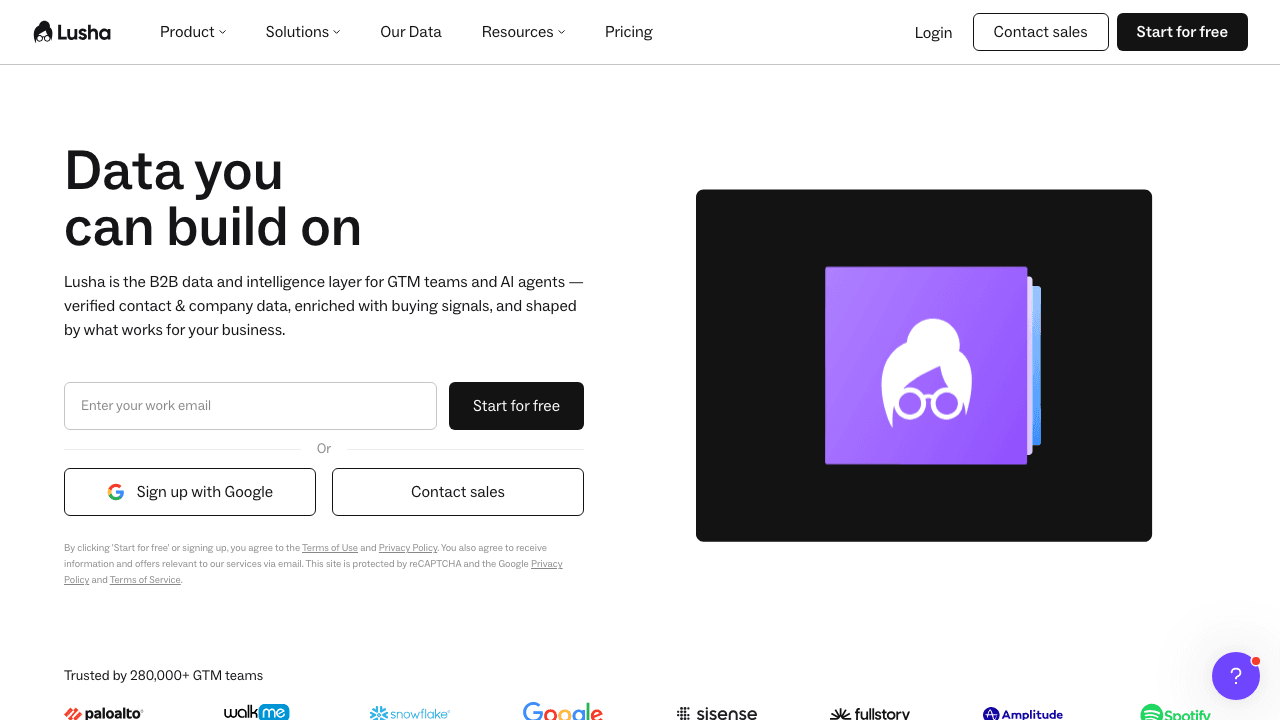
Best for: SMBs and startups prospecting US/UK markets who want a fast, affordable Chrome extension without a contract.
Lusha is the closest spiritual cousin to Apollo's capture experience: a polished one-click LinkedIn extension for verified emails and direct dials, with a free tier (40 credits/month) and no annual lock-in required.
- Strengths: best-in-class extension UX; strong US/UK/Canada accuracy; GDPR-compliant.
- Weaknesses: the credit system is the #1 complaint (phone numbers cost far more than emails); phone accuracy lags email; coverage thins outside core markets. Note a wide G2 (4.3/5) vs. Trustpilot gap driven by billing/data complaints.
- Pricing: free 40 credits/mo; paid from roughly $37/month (annual).
Versus Apollo: simpler and friendlier for pure contact capture, but no database search depth, dialer, or sequences.
4. Cognism
Best for: teams selling into Europe/EMEA, or compliance-sensitive orgs that need GDPR-verified, phone-checked data.
Cognism's pitch is data you can call: verified mobile numbers with notably higher connect rates in EMEA, and a GDPR/CCPA-compliant foundation that legal teams like.
- Strengths: standout European data and verified direct dials; full compliance story; clean filtering and CRM/LinkedIn integration.
- Weaknesses: North American and APAC coverage is weaker than EMEA; no native sequencing or dialing; opaque pricing and annual contracts.
- Pricing: no free tier; annual contracts commonly $15k–$25k+/year.
Versus Apollo: much stronger European/compliance data, but enterprise pricing and no built-in outreach.
5. RocketReach
Best for: individual SDRs and small teams who want a cheap, self-serve database with no contract.
RocketReach trades some data depth for accessibility — a large lookup database, transparent month-to-month pricing, and a free tier to test it.
- Strengths: dramatically cheaper than enterprise tools; decent North American work-email coverage; no contracts.
- Weaknesses: email accuracy is inconsistent by segment; international and small-company coverage is thin; some billing/renewal friction reported.
- Pricing: free 5 lookups; Essentials from about $33/month (annual).
Versus Apollo: cheaper and simpler for lookups, but no sequences/dialer and less consistent data.
6. Hunter.io
Best for: founders and email marketers whose single job is finding and verifying email addresses at scale.
Hunter is the email-discovery specialist. It does not do phone numbers, intent data, or technographics — and that focus is the point. Its verification is widely regarded as the gold standard, with very low bounce rates on verified results.
- Strengths: best-in-class email verification; you're not charged for misses; dead-simple UI.
- Weaknesses: no phone numbers, no intent/technographic depth; basic campaign features that growth teams outgrow quickly.
- Pricing: free 50 credits/mo; Starter from about $34/month (annual).
Versus Apollo: far better, cleaner email discovery — but it's a single-purpose tool, not a prospecting platform.

29+ CRMs supported with one extension
Find verified emails, phone numbers, and job titles on LinkedIn®. Add contacts to any of 29+ supported CRMs in one click.
Start Free Trial


 Trusted by 2,500+ users4.5
7. Clay
Best for: technical RevOps and growth teams who want multi-source "waterfall" enrichment and custom automated workflows.
Clay is a different animal: instead of one database, it runs waterfall enrichment across 150+ data sources and layers AI on top to find signals. It's the most powerful option here — and the most demanding.
- Strengths: waterfall lookups maximise match rates; AI agent can research accounts/signals; deeply customisable for RevOps.
- Weaknesses: steep learning curve (you really need a technical owner); failed enrichments still burn credits; weaker mobile-phone coverage; costs climb at scale.
- Pricing: free 100 credits; paid from roughly $167/month (annual) and up quickly.
Versus Apollo: vastly more flexible enrichment, but not a turnkey prospecting tool for non-technical reps.
8. LeadIQ
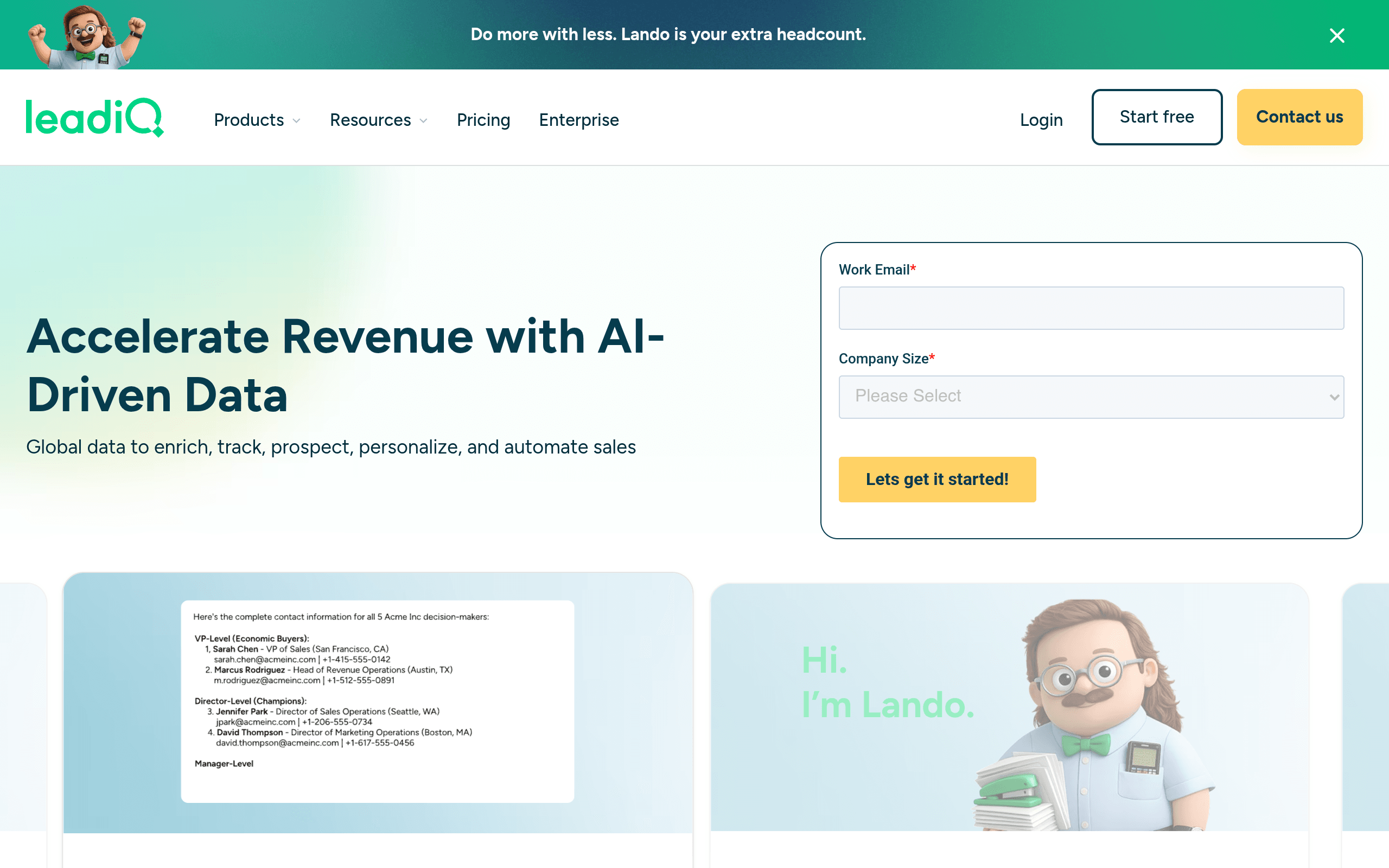
Best for: SDRs working LinkedIn/Sales Navigator who want one-click capture into the CRM plus job-change tracking.
LeadIQ overlaps with Apollo's capture workflow and adds "champion tracking" — alerts when key contacts change jobs, which is genuinely useful for account-based selling.
- Strengths: strong LinkedIn-to-CRM capture; good email accuracy; champion/job-change tracking.
- Weaknesses: phone data frequently inaccurate or personal; weaker international coverage; no dialer or sequences (LinkedIn → CRM lane only).
- Pricing: free 50 credits; paid commonly from about $75/user/month (annual).
Versus Apollo: comparable capture experience with nice job-change alerts, but narrower than Apollo's all-in-one scope.
9. Seamless.AI
Best for: high-volume SDR teams who prize real-time list-building speed and a very large database.
Seamless.AI emphasises a huge contact set (1.7B+ claimed) and fast real-time search, with a strong Chrome extension for grabbing contacts while browsing.
- Strengths: quick large-list building; big database with buyer-intent and job-change signals; accessible entry vs. enterprise tools.
- Weaknesses: reviewers report meaningful bounce rates and unreliable phone data; credits consumed on weak results; notable billing/auto-renewal and cancellation complaints; no sequencing or pipeline features.
- Pricing: free 50 lifetime credits; paid commonly from around $147/month.
Versus Apollo: faster bulk capture and a bigger raw count, but data-quality and billing friction are common themes — do diligence on contract terms.
10. Kaspr
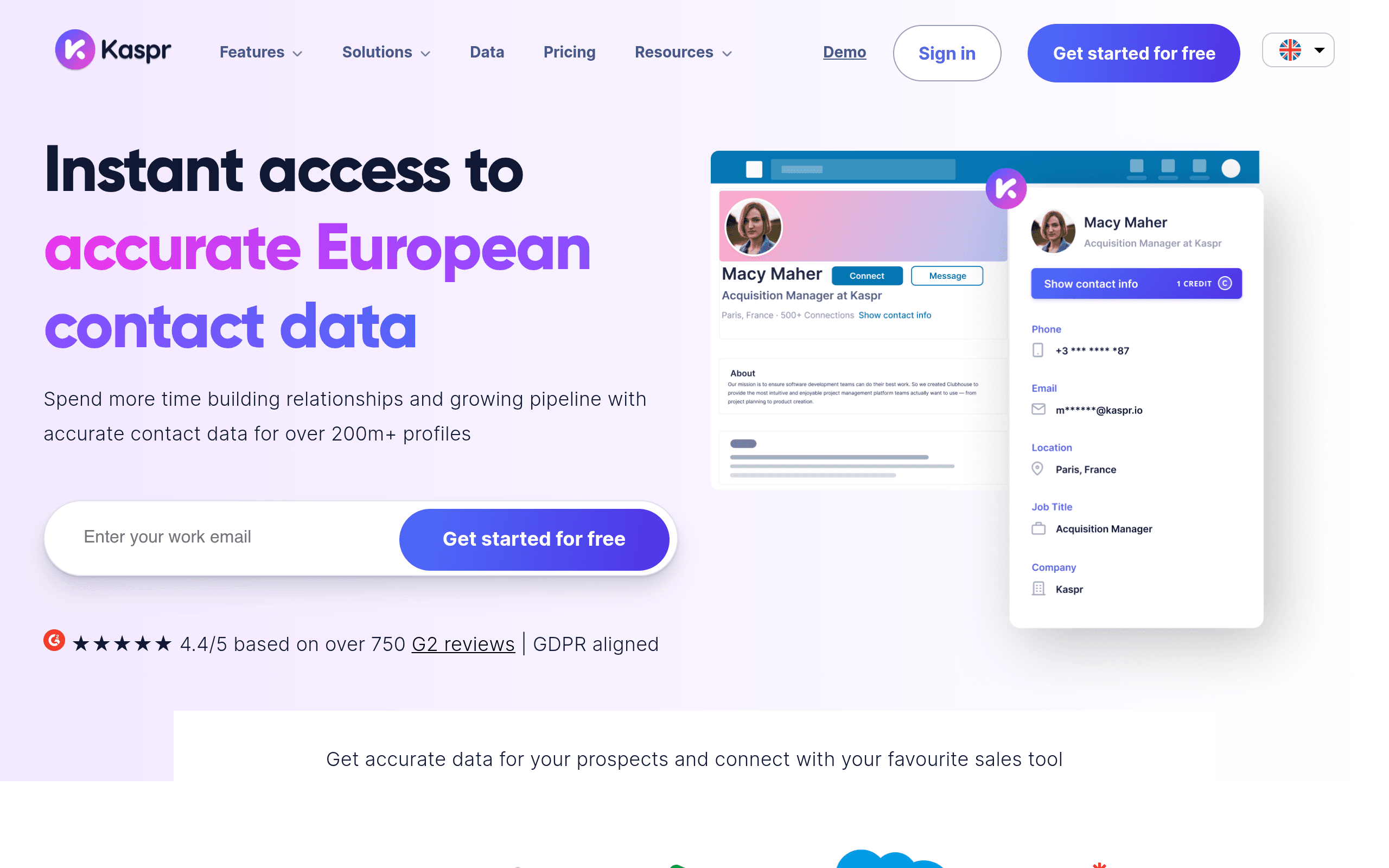
Best for: European/EMEA prospecting from LinkedIn, where its phone data is strongest.
Kaspr (part of Cognism) is a LinkedIn extension with a global database and a free daily-credit tier, leaning on strong European phone accuracy.
- Strengths: easy one-click LinkedIn retrieval; strong EU data; large global database; free tier (15 email + 5 phone credits/mo).
- Weaknesses: LinkedIn-dependent (no standalone search); US phone accuracy weaker than EU; a wide G2 (4.4/5) vs. Trustpilot gap on data/billing.
- Pricing: free 15+5 credits/mo; Starter from about $49/month (annual; cheaper in EUR).
Versus Apollo: a focused EU-leaning capture tool, not a full database/outbound platform.
11. UpLead
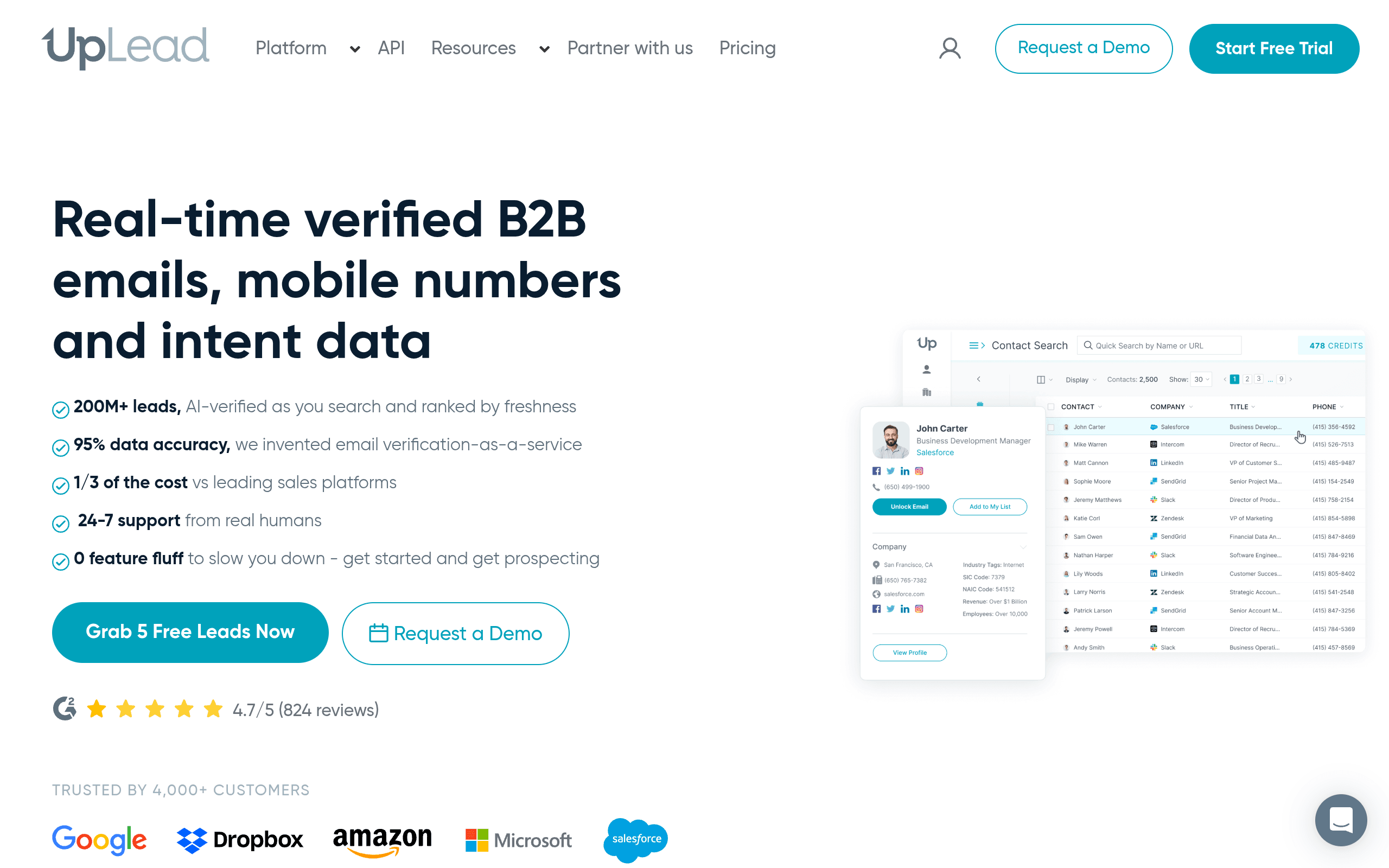
Best for: North-America-focused teams who want clean, verified data and transparent pricing.
UpLead's differentiator is a real-time email-verification guarantee — it refunds credits for invalid emails — plus a fast, friendly UI and published pricing.
- Strengths: verified data with credit refunds on bad emails; clean UX; 50+ filters; transparent pricing.
- Weaknesses: smaller database (160M) with NA-heavy coverage; data-only (no outreach); some cancellation/renewal friction reported.
- Pricing: 7-day trial (5 credits); Essentials from about $74/month (annual).
Versus Apollo: cleaner, more transparent data for NA prospecting, but no built-in outreach and a smaller dataset.
12. Wiza
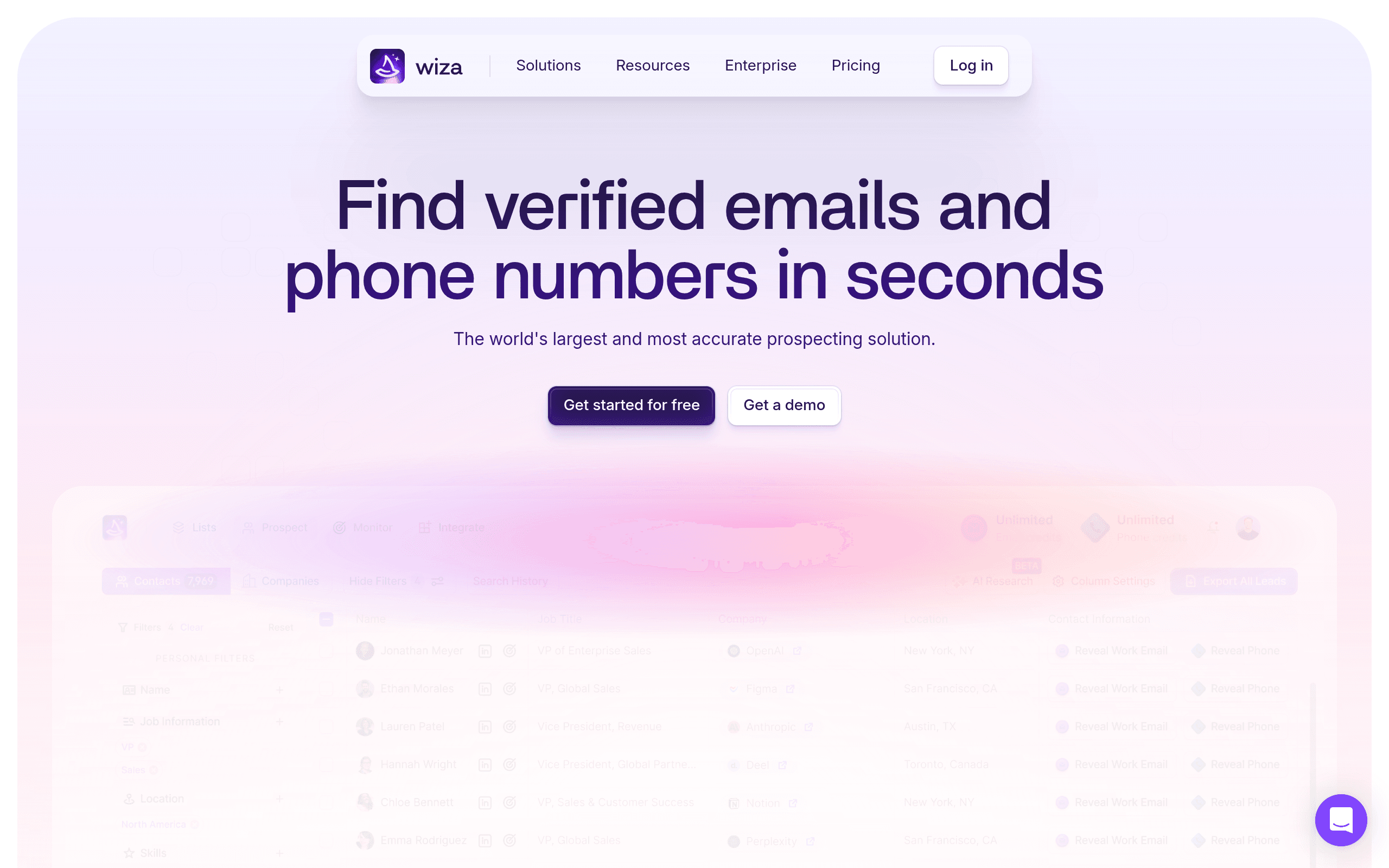
Best for: LinkedIn-native teams already paying for Sales Navigator who want auto-exported, verified lists.
Wiza turns Sales Navigator searches into verified, exportable lists with real-time checks and a job-change monitor.
- Strengths: hands-off "autopilot" list export; real-time verification; job-change monitoring; smooth CRM/email integration.
- Weaknesses: among the priciest at volume; requires a Sales Navigator subscription on top; coverage thins for smaller/regional companies; LinkedIn-dependent depth.
- Pricing: free 20 email + 5 phone credits/mo; Starter from $49/month.
Versus Apollo: great if you live in Sales Navigator, but the LSN requirement and per-credit cost add up.
Try Add to CRM — 7-day free trial
Find verified emails, phone numbers, and job titles on LinkedIn®. Add contacts to any of 29+ supported CRMs in one click.
Start Free TrialTrusted by 2,500+ users4.5Apollo alternatives — 12-tool comparison at a glance
| Tool | Free plan | Entry price (≈, annual) | Core job | Best for |
|---|---|---|---|---|
| Add to CRM | 7-day trial | Credit plans (see pricing) | Capture → CRM (28+ CRMs, LinkedIn + Gmail + Outlook) | Getting verified contacts into your CRM in one click |
| ZoomInfo | No | ~$15k+/yr | Enterprise database + intelligence | Large US-focused enterprise teams |
| Lusha | 40 credits/mo | ~$37/mo | LinkedIn capture | Affordable US/UK SMB capture |
| Cognism | No | ~$15–25k/yr | EU/GDPR database + dials | EMEA & compliance-heavy teams |
| RocketReach | 5 lookups | ~$33/mo | Self-serve lookups | Individual SDRs, budget buyers |
| Hunter.io | 50 credits/mo | ~$34/mo | Email finding + verification | Email discovery at scale |
| Clay | 100 credits | ~$167/mo | Waterfall enrichment + AI | Technical RevOps/growth |
| LeadIQ | 50 credits | ~$75/user/mo | LinkedIn → CRM + job changes | SDRs in Sales Navigator |
| Seamless.AI | 50 lifetime | ~$147/mo | High-volume list building | Speed-first SDR teams |
| Kaspr | 15+5 credits/mo | ~$49/mo | LinkedIn EU capture | EMEA LinkedIn prospecting |
| UpLead | 7-day trial | ~$74/mo | Verified NA data | NA teams wanting clean data |
| Wiza | 20+5 credits/mo | ~$49/mo | Sales Nav list export | LinkedIn/LSN-native teams |
Prices are entry tiers as of mid-2026 and change frequently — verify on each vendor's site.
Making your final decision: data, workflow, or all-in-one?
Most people leaving Apollo fall into one of three camps. Pick the archetype that sounds like you:
- "I need better or deeper data." Trade up to ZoomInfo (US enterprise) or Cognism (EMEA/compliance), or go cleaner-and-cheaper with UpLead or Hunter (email-first). Clay if you want to stitch many sources together and have a technical owner.
- "I just need contacts in my CRM — without the credit games." This is the Add to CRM lane: capture verified contacts from LinkedIn, Gmail, and Outlook and push them into any of 28+ CRMs in one click. No database to rent, no bounce-heavy bulk exports, no second system to reconcile. Lusha, LeadIQ, Kaspr, and Wiza also live here, with different surfaces and regional strengths.
- "I genuinely want the all-in-one (data + dialer + sequences)." Honestly? You may want to stay on Apollo — few tools here replicate the full bundle. The alternative is assembling best-of-breed pieces (e.g., a data tool + a separate sequencer), which gives you more control but more tools to manage.
Before you commit
- Test the data on your ICP, not a demo account — accuracy varies enormously by region and company size.
- Read the contract terms. Several tools here draw billing/auto-renewal complaints; month-to-month beats annual lock-in while you're evaluating.
- Count the effective cost, including credit overages — the sticker price is rarely the real one.
Start saving time and closing more deals
If your real problem was never the size of the database — it was the friction of getting a clean contact into your CRM — skip the platform you have to manage and try the tool built for that one job.
Add to CRM enriches and adds contacts to 28+ CRMs in one click, straight from LinkedIn, Gmail, and Outlook. Start a 7-day free trial and add your first contact in under two minutes.
Frequently asked questions
What is the best Apollo alternative? It depends on the job. For getting verified contacts into your CRM in one click across many CRMs, Add to CRM is the most focused choice. For a deeper enterprise database, ZoomInfo; for European/GDPR data, Cognism; for email discovery, Hunter; for budget self-serve lookups, RocketReach.
Is there a free Apollo alternative? Yes — Lusha (40 credits/mo), Hunter (50/mo), RocketReach (5 lookups), Seamless.AI (50 lifetime), Kaspr (15+5/mo), Clay (100 credits) and Wiza (20+5/mo) all have free tiers, and Add to CRM offers a 7-day free trial.
Why do teams leave Apollo? The most common reasons reviewers cite are credit overages making the real cost higher than expected, email bounce rates on exported lists, weaker international phone/email data, and billing/cancellation friction.
Do I need to replace Apollo entirely? Not necessarily. Many teams keep a lightweight data source and simply add a capture-to-CRM tool like Add to CRM to fix the workflow part — getting good contacts into the CRM — without paying for a full all-in-one platform.
Start saving time and closing more deals.
Find verified contact info for your prospects on LinkedIn®, Gmail and Outlook — and add them to your CRM with 1-click.

 Loading...Trusted by 2,500+ founders, SDRs & more